
Bourbon County commissioners advance major edits to employee handbook, send draft for legal review
Get AI-powered insights, summaries, and transcripts
Subscribe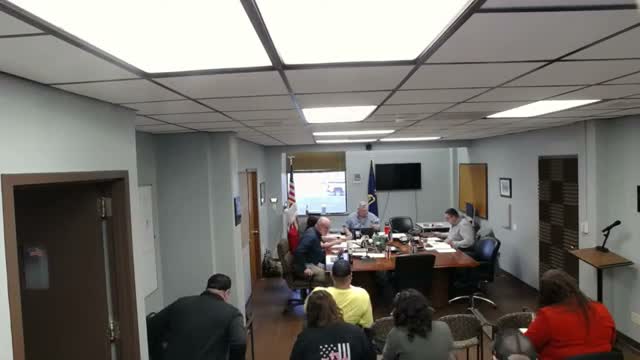
Summary
After a line‑by‑line special meeting Jan. 15, Bourbon County commissioners approved a package of edits to a 65‑page employee handbook — including new leave rules and procedural clarifications — and agreed to send the corrected draft to county counsel and the Kansas County Association of Municipalities for legal review before final adoption.
Bourbon County commissioners spent a special meeting Jan. 15 reviewing and voting on edits to a 65‑page draft employee handbook, approving multiple policy changes and agreeing to send the corrected draft to county counsel for legal review and then to the Kansas County Association of Municipalities for final review.
Commissioner Samuel Tran, who chaired the session, opened the meeting by saying the handbook is “about the organization,” not any single department, and asked department heads and elected officials to offer focused proposals. Early in the meeting Tran moved the board into a 20‑minute executive session under KSA 75‑4319(b)(2) for attorney consultation; the motion carried and commissioners returned with no action taken.
The commission approved language clarifying that the handbook is a living document and adopted a set of procedural additions intended to make payroll and leave administration clearer. Those additions included a defined process for reporting timekeeping errors (employees must report missed or incorrect punches within a reasonable period), a requirement that supervisors report employee status changes to HR and payroll within 48 hours, and a clear statement that the handbook’s policies do not automatically override prior resolutions.
Board members repeatedly emphasized that elected officials’ statutory authorities remain distinct from operational policies. Jennifer Hawkins, the county clerk (referenced in comments during the meeting), and the sheriff urged clearer wording about which records and personnel actions fall under county processes versus those controlled by elected offices or the courts.
On statutory accommodations, the board agreed to incorporate federal and state protections by reference where practical rather than rewrite statutes in full. Commissioners instructed staff to add USERRA (military reemployment rights), the federal lactation protections (the PUMP Act/FLSA), and the Kansas Domestic Violence Leave Act (KSA 44‑1132) into the handbook and to cite the statutes as guidance for implementation.
Several items were deferred for legal drafting or counsel review. The sheriff asked for clearer safeguards around how CORE (open‑records) requests are fulfilled so that sensitive law‑enforcement material is reviewed by counsel before release; commissioners agreed to route sensitive requests to counsel and asked the county attorney to produce drafting language.
Tran closed the session by asking that Dr. Cohen (county counsel) receive the corrected draft, then forward it to KCAM for review. The board approved that workflow and voted to adopt the handbook in its corrected form once counsel and KCAM complete their reviews.
What happens next: the board directed staff to collect the final redlines and return a counsel‑approved version for formal adoption at a later public meeting.