Get email alerts on the Lower Trigger topic
No spam. Unsubscribe anytime.
Renters urge lowering Portland’s relocation trigger to 5% and increasing payments
Summary
During a renters forum, tenant advocates and renters urged the council to lower the RELO 10% trigger to 5%, increase payment levels and untie indexing from commercial datasets; they framed the change as a practical step to reduce homelessness and disproportionate harm to vulnerable renters.
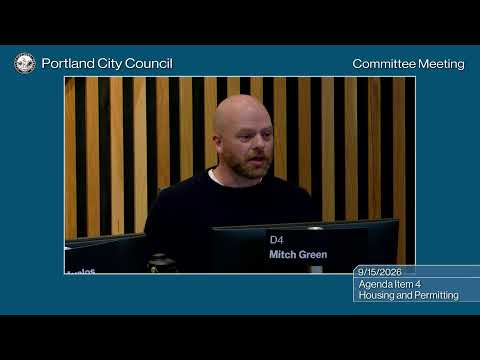
Multiple renters and tenant advocates urged the committee to lower RELO's 10% trigger to 5% and increase the payment amounts to reflect current relocation costs.
Jamie Evenstar, who said she authored Portland's tenant protections and the RELO formulas, told the committee: "The 10% run increase to qualify for RELO has always been too high... We must demand the state give us control over our rental markets." Evenstar argued the trigger should be lowered to 5% and payment calculations updated because severe rent burden is more widespread now than in 2017.
Medical practitioner Heather Heatley described health harms associated with moving and urged protection for elderly, disabled and medically fragile renters. Ben Gilbert cited a recent antitrust settlement that he said involved algorithmic pricing by large landlords and called for stronger regulation and local authority.
Small landlords and some speakers urged caution. Mariah Hudson, a small housing provider and former renter, asked the committee to finish the bureau's policy review before changing the threshold and warned that a lower trigger could prompt small owners to sell, reducing housing supply.
Ending: The committee heard sharply contrasting views — tenant advocates pushing for immediate changes and small landlords urging deliberation — and PHB and councilors committed to using the forthcoming evaluation and additional data to inform any policy change.
AI generated
The text on this page is AI generated. Summaries, highlights, analysis, and video transcripts are all produced from the original source material.
AI can make mistakes, so if you spot one, and we will fix it for everyone.
Note: the source content is unaltered by us. Any content source we link to, be it a video, an audio recording, or a document, is presented exactly as its publisher released it. That publisher is usually a government body, sometimes an individual official or another organisation.