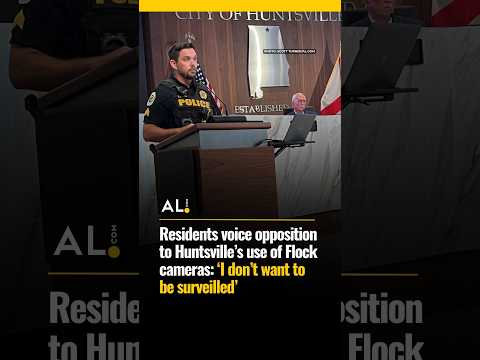
Questioners warn ALPRs could enable mass surveillance, cite vendor seminar
Summary
Questioners at a Media meeting said mass surveillance from plate-reading systems could erode freedom of assembly and quoted an officer who attended a vendor seminar saying the vendor 'literally tracks people.' Officials responded that local LPRs do not produce live feeds and said HPD's system does not use spatial-recognition audio detection.
At a Media meeting, a questioner said their chief concern about ALPR/LPR systems is civil-liberty harm, arguing that "mass surveillance degrades the rights of freedom of assembly." The questioner said they were quoting Noel Picardo, described in the transcript as "a Rhode Island police officer" who attended a vendor seminar.
The meeting record includes the quoted passage presented by the questioner: "I do not know how anyone can argue against the idea that flock literally tracks people." The remark was offered to illustrate worries that some vendor demonstrations or capabilities might be used to associate movement or other data with people, not only plate numbers.
Agency speakers at the same discussion disputed that characterization of local systems. An agency official said LPRs "cannot determine where you're traveling to" and "do not produce a live feed," and another speaker identified the local deployment as HPD's, asserting their LPRs "do not use spatial recognition for audio detection." The officials presented those points to differentiate local practice from the vendor-quote cited by the questioner.
The exchange did not include any recorded vote, policy change, or specification of data-retention or sharing rules; the transcript records assertions and counter-claims but no formal decisions.
AI generated
The text on this page is AI generated. Summaries, highlights, analysis, and video transcripts are all produced from the original source material.
AI can make mistakes, so if you spot one, and we will fix it for everyone.
Note: the source content is unaltered by us. Any content source we link to, be it a video, an audio recording, or a document, is presented exactly as its publisher released it. That publisher is usually a government body, sometimes an individual official or another organisation.