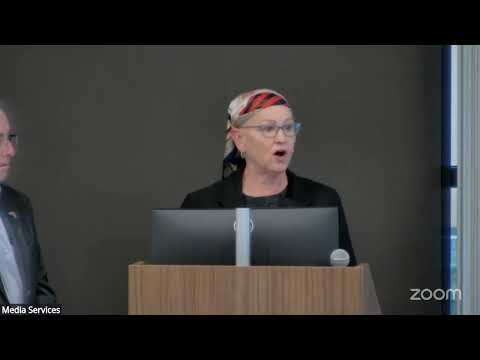
House Rural Development Committee meets in Blue Ridge to examine rural health, EMS and infrastructure
Summary
The Georgia House Rural Development Committee convened in Blue Ridge to hear presentations on rural vision care, EMS innovations, rail infrastructure, the state's $218.8 million Great Health grant and home- and community-based services. Local officials described water, wastewater and tourism projects.
The House Rural Development Committee met in Blue Ridge on Sept. 26 to examine policy and funding gaps affecting rural healthcare, transportation and local infrastructure. Chair Lady Hagen opened the session and invited local leaders to describe projects and priorities for Fannin County and surrounding areas.
Local officials framed the day. "This campus stands as a powerful example of what can be accomplished when leaders invest in the future of rural regions," Provost Dr. Shodan Gil told committee members, and Blue Ridge Mayor Andy Rhodess outlined downtown, water and pump-station projects that county leaders say are central to maintaining tourism and basic services.
Committee members then heard a series of presentations focused on rural health delivery and access. Presenters included the Georgia Lions Lighthouse Foundation, which described a statewide teleoptometry program serving school children and adults without local vision providers; Amerro (AirPro), which described a technology-driven EMS model called Navacare; rail industry representatives outlining rising costs to build and maintain track; and Department of Community Health officials who summarized Georgia's rural health transformation grant.
Members asked detailed operational questions about workforce, reimbursement, and local service continuity. Representative Johnny Chastain and others emphasized maintaining services close to home, while several presenters urged pilots and state support to scale telehealth and EMS-ready programs.
The committee adjourned after hearing from community health centers and providers about opportunities to divert non-urgent care from emergency departments and strengthen patient-centered medical homes in rural counties.
AI generated
The text on this page is AI generated. Summaries, highlights, analysis, and video transcripts are all produced from the original source material.
AI can make mistakes, so if you spot one, and we will fix it for everyone.
Note: the source content is unaltered by us. Any content source we link to, be it a video, an audio recording, or a document, is presented exactly as its publisher released it. That publisher is usually a government body, sometimes an individual official or another organisation.