Water Contamination Concerns Spark Environmental Debate
December 04, 2024 | Gloucester County, Virginia
This article was created by AI summarizing key points discussed. AI makes mistakes, so for full details and context, please refer to the video of the full meeting. Please report any errors so we can fix them. Report an error »
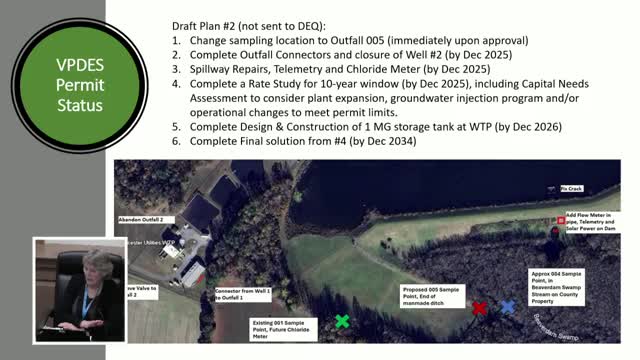
Participants expressed frustration over the perception of environmental threats, noting that tests conducted on their property indicated healthy conditions, with no evidence of dead trees or other ecological damage. They argued that the chloride levels in the water, often cited as a concern, have not resulted in detrimental effects on local plant life, which appears to be thriving despite the salinity.
One official pointed out that the current regulatory focus on numerical thresholds for salinity may be overly stringent, suggesting that the adaptive resilience of local flora contradicts claims of environmental harm. The discussion also touched on the need for legislative support to address these concerns effectively.
The meeting underscored the complexities of water management and environmental oversight, particularly regarding the balance between regulatory measures and the realities of local ecosystems. As the conversation progressed, officials questioned the rationale behind stringent regulations, particularly in light of the Chesapeake Bay's existing salinity levels, suggesting that the oversight may be excessive.
View the Full Meeting & All Its Details
This article offers just a summary. Unlock complete video, transcripts, and insights as a Founder Member.
30-day money-back guarantee
Sponsors
Proudly supported by sponsors who keep Virginia articles free in 2026

