Zoning Changes Spark Debate Over Accessory Dwelling Units
October 07, 2024 | Simsbury Center, Capitol County, Connecticut
This article was created by AI summarizing key points discussed. AI makes mistakes, so for full details and context, please refer to the video of the full meeting. Please report any errors so we can fix them. Report an error »
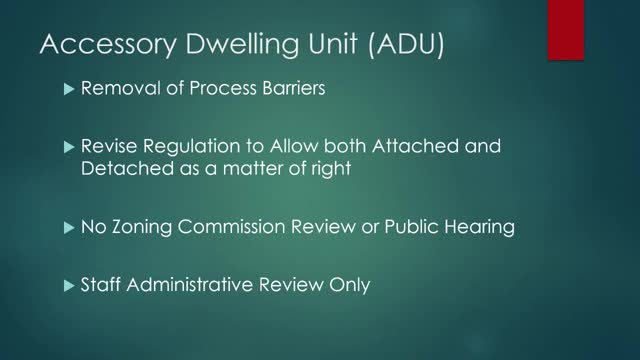
Supporters of the amendment argue that reducing bureaucratic barriers will facilitate the creation of more affordable housing options, particularly as the community faces increasing demand for diverse living arrangements. They noted that the current review process has led to several denials of detached unit applications, often due to neighborhood opposition. Proponents emphasized the importance of property owners' rights and the potential for increased property values associated with ADUs.
However, concerns were raised about the implications of removing public hearings from the approval process. Critics argued that neighborhood input is crucial, especially when changes could significantly impact community dynamics. They expressed fears that without public comment, residents might feel disenfranchised and that the absence of hearings could lead to developments that do not align with community standards.
The discussion highlighted a broader context of housing needs, particularly for aging populations and individuals with disabilities, underscoring the necessity for inclusive housing solutions. Some officials pointed out that while the proposed changes aim to simplify the process, it is essential to ensure that the community remains informed and engaged in decisions that affect their neighborhoods.
As the meeting concluded, it was clear that while there is a shared goal of increasing housing availability, the balance between facilitating development and maintaining community involvement remains a contentious issue. Further public hearings are anticipated to refine the proposal and address the concerns raised by both supporters and opponents of the amendment.
Don't Miss a Word: See the Full Meeting!
Go beyond summaries. Unlock every video, transcript, and key insight with a Founder Membership.
30-day money-back guarantee
Sponsors
Proudly supported by sponsors who keep Connecticut articles free in 2026

