Debate ignites over controversial hate speech policy
November 21, 2024 | Waunakee Community School District, School Districts, Wisconsin
This article was created by AI summarizing key points discussed. AI makes mistakes, so for full details and context, please refer to the video of the full meeting. Please report any errors so we can fix them. Report an error »
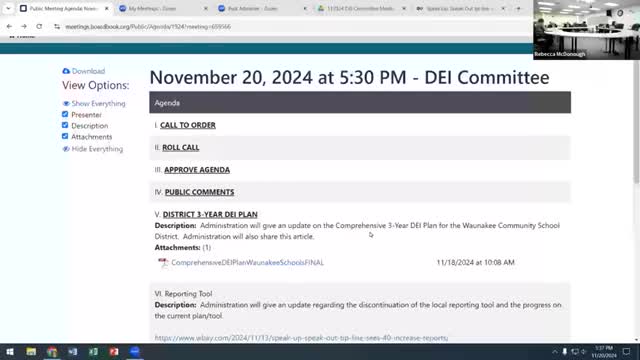
Greg Gens, a parent of two daughters in the district, emphasized the importance of addressing hate speech and discrimination in schools. He asserted that derogatory language should not be tolerated at school events and called for strict consequences for such behavior. However, Gens raised concerns about the terminology used in the proposed policy, particularly the definition of hate speech, which he argued could be politically charged and potentially stifle open dialogue among students.
Gens articulated a belief that terms like \"hate speech\" and \"microaggressions\" are often employed to advance specific ideological agendas, which he fears could limit discussions on contentious issues, such as gender-specific sports and facilities. He questioned whether expressing opinions on these topics could lead to disciplinary actions under the new policy, suggesting that it might inadvertently suppress legitimate discourse.
The proposed policy defines hate speech as any communication that attacks or insults individuals based on protected characteristics, including race and gender. Gens expressed concern that this broad definition could lead to misunderstandings and misinterpretations, ultimately infringing on the rights of students and staff to express their views.
The meeting highlighted the delicate balance between protecting students from discrimination and ensuring that free speech is upheld within the educational environment. As the board considers the policy, the community remains engaged in discussions about its potential impact on school culture and student expression.
View the Full Meeting & All Its Details
This article offers just a summary. Unlock complete video, transcripts, and insights as a Founder Member.
30-day money-back guarantee
Sponsors
Proudly supported by sponsors who keep Wisconsin articles free in 2026

