Rethinking Housing Density to Combat Affordability Crisis
October 17, 2024 | Sandy City Planning and Zoning, Sandy, Salt Lake County, Utah
This article was created by AI summarizing key points discussed. AI makes mistakes, so for full details and context, please refer to the video of the full meeting. Please report any errors so we can fix them. Report an error »
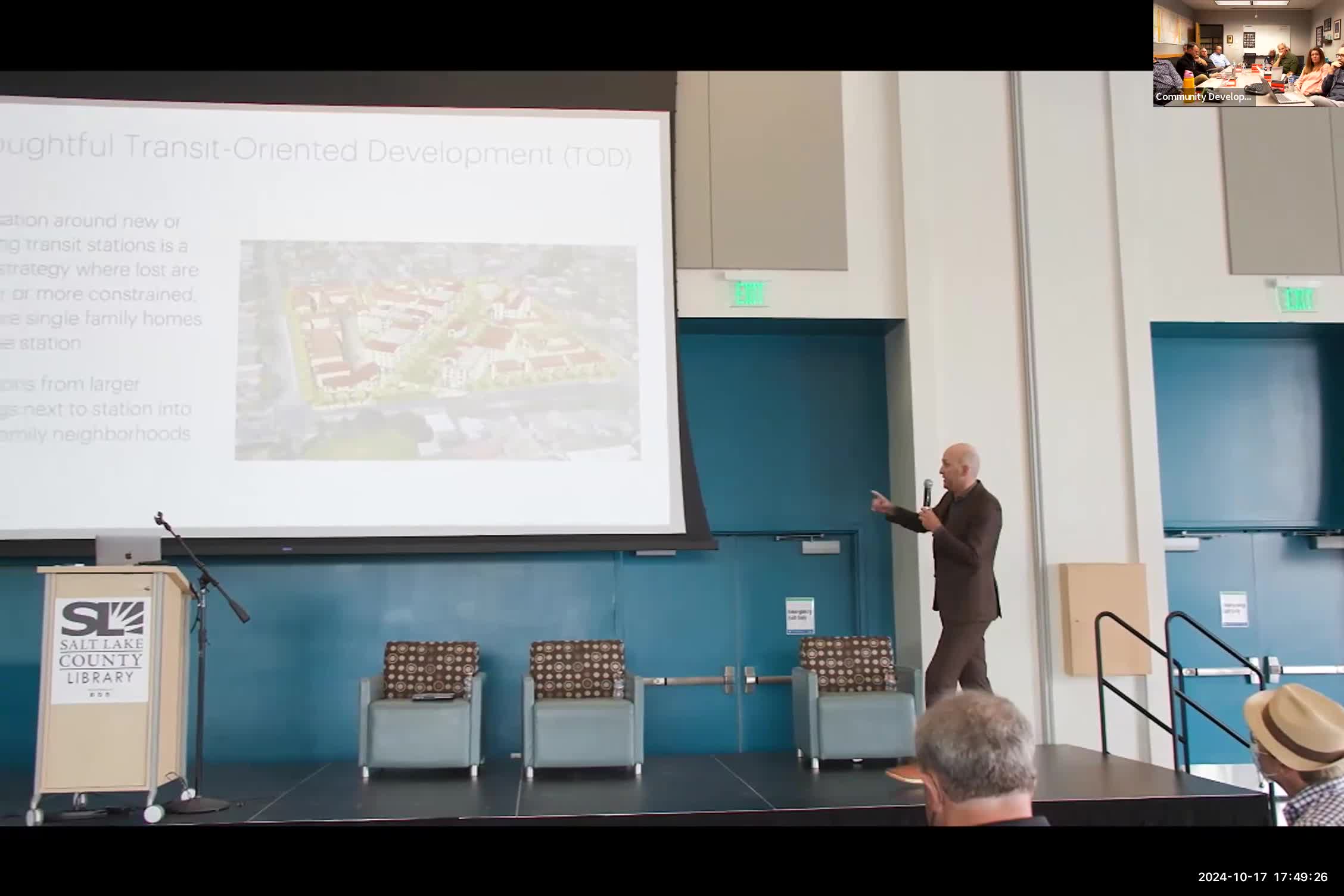
Participants highlighted the potential for redeveloping underutilized commercial properties, such as dying malls and strip malls, into residential units. This approach could yield up to 82 units per acre, depending on the design and zoning regulations. The discussion emphasized the importance of thoughtful transitions between higher-density buildings along major corridors and lower-density single-family neighborhoods.
A significant point of contention arose regarding zoning regulations that currently limit the development of smaller, more affordable housing units. One speaker noted that existing zoning codes often fail to accommodate high-density living arrangements, such as those found in Midtown Sacramento, where a two-story building can achieve a density of 90 units per acre due to smaller unit sizes. This discrepancy highlights a disconnect in how density is calculated, as zoning often treats all units equally regardless of their size.
The meeting also touched on the challenges posed by parking requirements, which can inflate housing costs and deter the development of affordable units. Officials debated the need to balance parking availability with the goal of creating more attainable housing options. Some suggested eliminating minimum parking requirements to encourage denser developments, while others raised concerns about the implications for community infrastructure and accessibility.
Overall, the discussions underscored a growing recognition of the need for flexible zoning policies that can adapt to the changing housing landscape, particularly in light of increasing urbanization and the demand for diverse living arrangements. The meeting concluded with a call for further exploration of these concepts to foster more inclusive and sustainable communities.
View the Full Meeting & All Its Details
This article offers just a summary. Unlock complete video, transcripts, and insights as a Founder Member.
30-day money-back guarantee
Sponsors
Proudly supported by sponsors who keep Utah articles free in 2026

