Controversial zoning change sparks debate over community development
November 06, 2024 | Dunn County, Wisconsin
This article was created by AI summarizing key points discussed. AI makes mistakes, so for full details and context, please refer to the video of the full meeting. Please report any errors so we can fix them. Report an error »
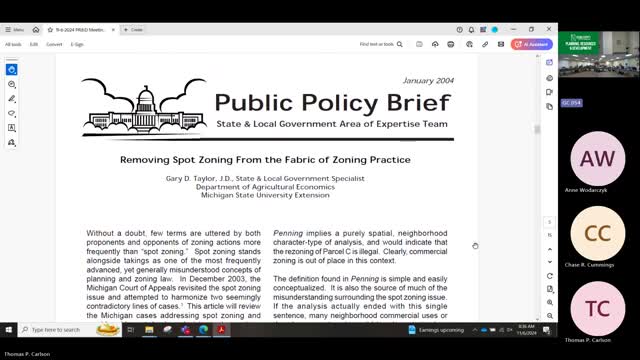
Anne, a key speaker at the meeting, addressed the complexities of spot zoning, which occurs when a small area of land is designated for a different use than the surrounding properties. She emphasized the importance of thorough analysis to ensure that any zoning changes align with the community's needs and existing land use patterns. The committee has been proactive in identifying potential issues related to spot zoning, and Anne noted that the proposed change to Residential 1 (R1) zoning is compatible with the area's existing single-family developments.
The discussion highlighted the differences between General Agricultural (GA) and R1 zoning, particularly in terms of density and permitted uses. While GA allows for a broader range of agricultural activities, R1 is specifically designed for single-family residential development. Anne pointed out that the land in question is not suitable for large-scale agricultural use due to its steep slopes and non-prime farmland status, making residential development a more viable option.
The committee's analysis included considerations of public benefits, such as addressing housing needs and ensuring that the proposed changes align with the county's comprehensive plan. The meeting also touched on concerns from local residents regarding traffic safety and driveway placements, which will ultimately be determined by the town.
Overall, the committee concluded that the proposed zoning change to R1 would enhance housing supply without compromising agricultural land use, maintaining compatibility with the surrounding residential developments.
Don't Miss a Word: See the Full Meeting!
Go beyond summaries. Unlock every video, transcript, and key insight with a Founder Membership.
30-day money-back guarantee
Sponsors
Proudly supported by sponsors who keep Wisconsin articles free in 2026

