City Council Faces Crucial Decisions on Development Funding
September 25, 2024 | West Jordan City Redevelopment Agency, West Jordan, Salt Lake County, Utah
This article was created by AI summarizing key points discussed. AI makes mistakes, so for full details and context, please refer to the video of the full meeting. Please report any errors so we can fix them. Report an error »
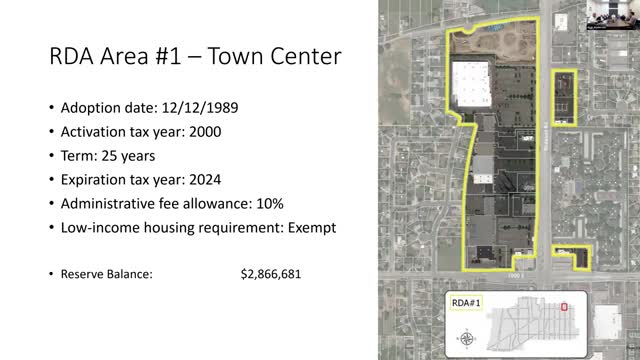
Officials highlighted that as these TIF districts expire, the city will cease to collect tax increments, resulting in a shift where all property tax revenue will revert to the general fund and other taxing entities, such as Salt Lake County and the Jordan School District. This transition raises concerns about the potential loss of funding for ongoing and future development projects.
The council also explored the possibility of leveraging existing funds—approximately $2 million earmarked for development in one area and $6 million in another—to support infrastructure improvements, such as sidewalks and access gates. These enhancements are seen as vital to attracting commercial development and improving community accessibility.
Moreover, the discussion included strategies to encourage developers to pursue mixed-use projects rather than solely residential developments. Officials emphasized the need to communicate the city’s preference for commercial growth, suggesting that financial incentives could be offered to developers willing to invest in commercial spaces.
As the city navigates these challenges, officials plan to revisit the topic in future meetings to explore options for utilizing available funds effectively and to strategize on how to maximize the benefits of expiring TIF districts for community development.
View the Full Meeting & All Its Details
This article offers just a summary. Unlock complete video, transcripts, and insights as a Founder Member.
30-day money-back guarantee
Sponsors
Proudly supported by sponsors who keep Utah articles free in 2026

