Experts question aquifer size amid water scarcity concerns
November 14, 2024 | Utah Water Rights, Utah Department of Natural Resources, Offices, Departments, and Divisions, Organizations, Utah Executive Branch, Utah
This article was created by AI summarizing key points discussed. AI makes mistakes, so for full details and context, please refer to the video of the full meeting. Please report any errors so we can fix them. Report an error »
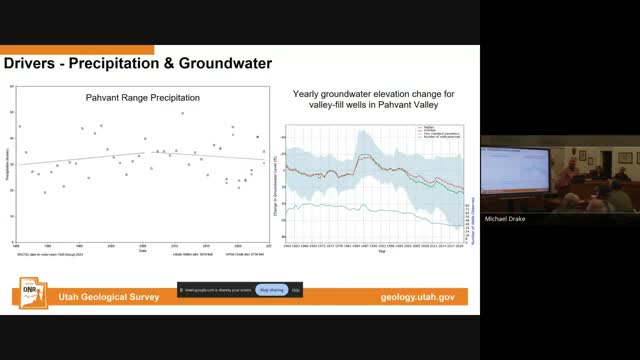
One participant noted that recent measurements were taken from over 100 wells across the valley, deliberately avoiding those monitored annually to ensure a broader geographic representation. The results indicated consistent water levels across nearby wells, suggesting stability in the aquifer's behavior despite construction activities in the area.
A key concern raised was the lack of comprehensive data regarding the aquifer's total volumetric storage. While officials acknowledged that the extent of the aquifer is still somewhat uncertain, they confirmed that there is currently a net deficit in water levels—more water is being extracted than replenished. This imbalance poses risks to the aquifer's structural integrity and its capacity to store water effectively.
Additionally, questions were raised about whether areas such as Deseret, Delta, and Hinkley are part of the same aquifer system, as these regions were not included in the current study. Officials clarified that while the study focused on specific wells, it aimed to provide a representative overview of water levels across the valley.
Concerns about water quality were also addressed, with officials noting that water quality tends to decrease with depth, further complicating the management of this vital resource. The discussions underscored the need for ongoing research and monitoring to ensure the sustainability of the aquifer amid increasing demand and environmental pressures.
Don't Miss a Word: See the Full Meeting!
Go beyond summaries. Unlock every video, transcript, and key insight with a Founder Membership.
30-day money-back guarantee
Sponsors
Proudly supported by sponsors who keep Utah articles free in 2026

Excel Chiropractic

