Groundwater pumping surges amid changing climate conditions
November 14, 2024 | Utah Water Rights, Utah Department of Natural Resources, Offices, Departments, and Divisions, Organizations, Utah Executive Branch, Utah
This article was created by AI summarizing key points discussed. AI makes mistakes, so for full details and context, please refer to the video of the full meeting. Please report any errors so we can fix them. Report an error »
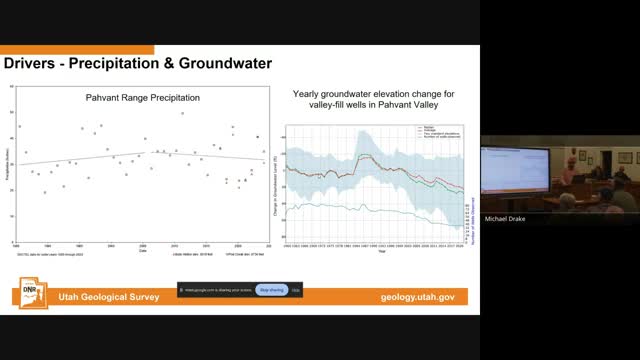
The meeting highlighted a notable correlation between precipitation levels and groundwater pumping, with a one-year lag observed between the two. As precipitation decreases, groundwater pumping tends to increase, and vice versa. Historical data from the mid-1940s to 2021 indicates a steady rise in groundwater pumping, escalating from approximately 80,000 acre-feet per year in the 1960s to around 149,000 acre-feet in 2021. This increase raises questions about the underlying causes, especially given the lack of new wells or expanded irrigated areas.
Officials pointed out that the end of the Central Utah Canal's operation in the late 1980s significantly impacted groundwater levels, particularly in the McCormick and Greenwood areas. The canal had previously contributed about 14,000 acre-feet per year to aquifer recharge, and its cessation has coincided with observed declines in groundwater levels.
Additionally, the meeting addressed the rise in evapotranspiration rates across the valley, which have increased by approximately 45 inches from 2000 to 2021. This uptick, attributed to healthier and denser crops, has led to a higher consumptive use of water—an estimated increase of 20,000 acre-feet in 2021 alone. While improved irrigation techniques have enhanced crop yields, they have also resulted in greater water consumption, illustrating the \"efficiency paradox\" where more efficient irrigation methods lead to increased water use due to denser vegetation.
The discussions underscored the complexities of water management in the region, emphasizing the need for strategic planning to balance agricultural demands with sustainable groundwater practices. As climate variability continues to influence precipitation patterns, the implications for water resources and agricultural sustainability remain a pressing concern for local authorities.
Don't Miss a Word: See the Full Meeting!
Go beyond summaries. Unlock every video, transcript, and key insight with a Founder Membership.
30-day money-back guarantee
Sponsors
Proudly supported by sponsors who keep Utah articles free in 2026

Excel Chiropractic

