North Koreans suffer in silence during COVID lockdowns
October 24, 2024 | US Department of State
This article was created by AI summarizing key points discussed. AI makes mistakes, so for full details and context, please refer to the video of the full meeting. Please report any errors so we can fix them. Report an error »
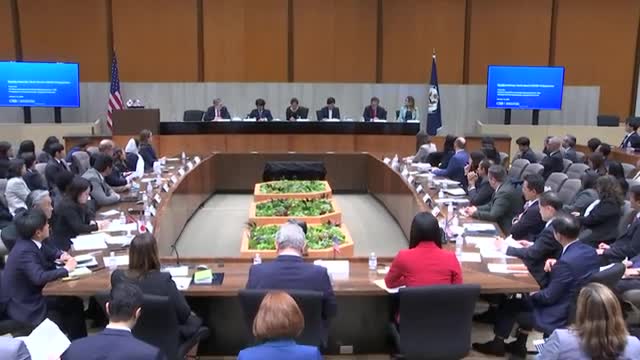
In a recent government meeting, discussions highlighted the severe human rights abuses in North Korea, particularly during the COVID-19 pandemic. A speaker presented findings from a survey conducted at the end of last year, revealing the extent of the government's neglect and mistreatment of its citizens during a prolonged lockdown that lasted over three years.
The survey, which included responses from a diverse demographic across various provinces, indicated that despite North Korea's official claim of zero COVID-19 cases until April 2022, a staggering 92% of respondents reported knowing someone who had contracted the virus prior to that date. The findings suggest that COVID-19 was spreading \"like wildfire\" long before the government acknowledged its presence.
Access to healthcare and essential resources was alarmingly limited, with only 13% of participants having access to testing and a mere 8% receiving masks from the government. Most individuals resorted to making their own masks from cloth, which offered little protection. Following the government's admission of the virus, it was reported that the general public received only one vaccination dose, while military personnel received three, all sourced from China. The survey also uncovered tragic instances of deaths resulting from the misuse of medications and scams targeting desperate citizens.
The situation was exacerbated by strict quarantine measures and a worsening food crisis, with 97% of respondents unable to acquire necessary goods during the lockdown. Those who violated quarantine rules faced severe punishments, including imprisonment in labor camps for periods ranging from two days to six months.
The speaker emphasized the regime's control over information, which hindered the public's ability to report cases accurately. A significant 64% of respondents expressed distrust in government information, and only a minority subscribed to conspiracy theories suggesting the virus was a bioweapon from the U.S. or South Korea.
The findings also revealed growing resentment among the populace towards the government's handling of the pandemic, with many indicating a willingness to bypass quarantine rules through bribery. This sentiment points to emerging vulnerabilities within the regime, as the government's failure to support its citizens during the crisis has fostered new resistance.
The meeting underscored the ongoing human rights crisis in North Korea, with the residual effects of the pandemic still resonating within the country today.
The survey, which included responses from a diverse demographic across various provinces, indicated that despite North Korea's official claim of zero COVID-19 cases until April 2022, a staggering 92% of respondents reported knowing someone who had contracted the virus prior to that date. The findings suggest that COVID-19 was spreading \"like wildfire\" long before the government acknowledged its presence.
Access to healthcare and essential resources was alarmingly limited, with only 13% of participants having access to testing and a mere 8% receiving masks from the government. Most individuals resorted to making their own masks from cloth, which offered little protection. Following the government's admission of the virus, it was reported that the general public received only one vaccination dose, while military personnel received three, all sourced from China. The survey also uncovered tragic instances of deaths resulting from the misuse of medications and scams targeting desperate citizens.
The situation was exacerbated by strict quarantine measures and a worsening food crisis, with 97% of respondents unable to acquire necessary goods during the lockdown. Those who violated quarantine rules faced severe punishments, including imprisonment in labor camps for periods ranging from two days to six months.
The speaker emphasized the regime's control over information, which hindered the public's ability to report cases accurately. A significant 64% of respondents expressed distrust in government information, and only a minority subscribed to conspiracy theories suggesting the virus was a bioweapon from the U.S. or South Korea.
The findings also revealed growing resentment among the populace towards the government's handling of the pandemic, with many indicating a willingness to bypass quarantine rules through bribery. This sentiment points to emerging vulnerabilities within the regime, as the government's failure to support its citizens during the crisis has fostered new resistance.
The meeting underscored the ongoing human rights crisis in North Korea, with the residual effects of the pandemic still resonating within the country today.
Don't Miss a Word: See the Full Meeting!
Go beyond summaries. Unlock every video, transcript, and key insight with a Founder Membership.
✓
Get instant access to full meeting videos
✓
Search and clip any phrase from complete transcripts
✓
Receive AI-powered summaries & custom alerts
✓
Enjoy lifetime, unrestricted access to government data
30-day money-back guarantee
