Expert warns of dire consequences for local wetlands
September 26, 2024 | Edmonds, Snohomish County, Washington
This article was created by AI summarizing key points discussed. AI makes mistakes, so for full details and context, please refer to the video of the full meeting. Please report any errors so we can fix them. Report an error »
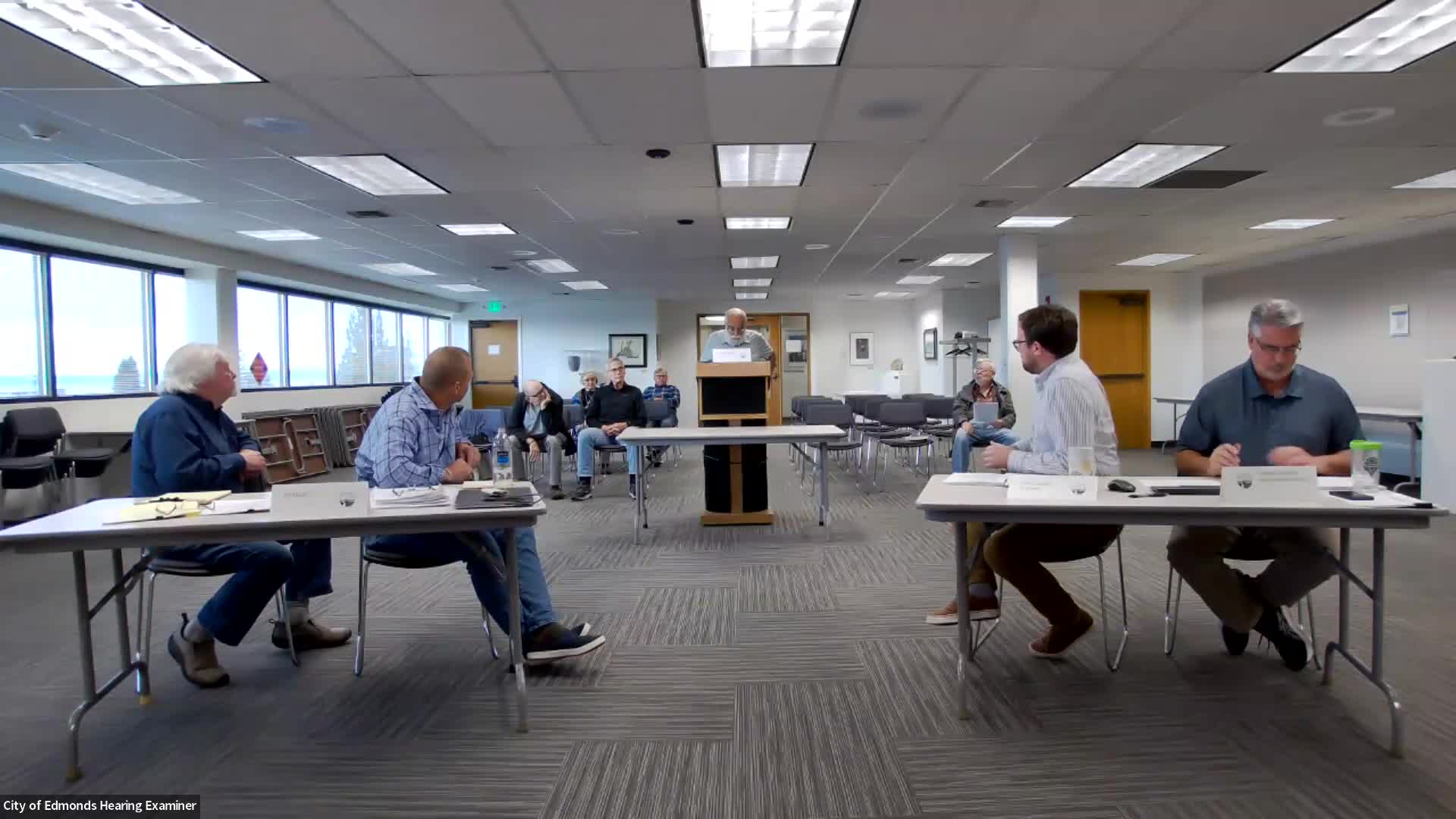
The biologist highlighted the interconnectedness of wetlands and surrounding environments, warning that any alterations could have immediate and detrimental effects on subsurface water dynamics. He pointed out that the proposed development could lead to a net loss of critical area functions, violating local regulations that protect such environments. The biologist also raised concerns about public safety, noting that changes to the wetland could adversely affect adjacent city properties and public access trails.
In a recommendation to deny the application, he suggested that the parcel be sold to the city or a conservation trust to preserve its natural state, thereby supporting the health of the creek and its surrounding habitat.
Another attendee, Amun White, shared her background as a physician and her commitment to environmental health. She expressed a belief in the natural healing processes of streams and questioned the need for extensive management interventions. Her comments underscored a broader sentiment in the meeting regarding the importance of protecting natural ecosystems and allowing them to function without human interference.
The discussions reflect a growing concern among community members and experts about the balance between development and environmental preservation, particularly in sensitive areas like wetlands that play a crucial role in local biodiversity and ecosystem health.
Don't Miss a Word: See the Full Meeting!
Go beyond summaries. Unlock every video, transcript, and key insight with a Founder Membership.
30-day money-back guarantee
Sponsors
Proudly supported by sponsors who keep Washington articles free in 2026

