Oil Companies Face Backlash Over Controversial Carbon Capture Project
October 21, 2024 | Kern County, California
This article was created by AI summarizing key points discussed. AI makes mistakes, so for full details and context, please refer to the video of the full meeting. Please report any errors so we can fix them. Report an error »
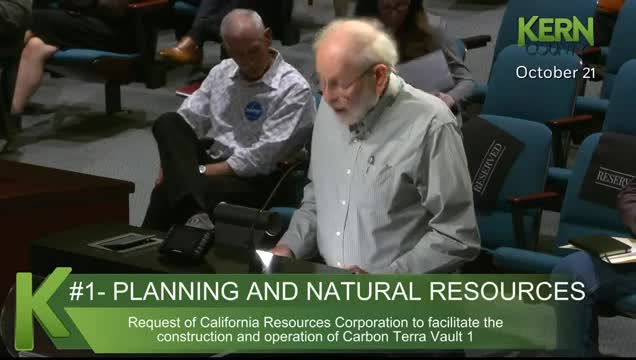
One vocal opponent criticized the project for its inefficiency, stating that it releases over three times the amount of greenhouse gases into the atmosphere compared to what it captures. This individual emphasized that simply leaving carbon in the ground would be a more effective solution, arguing that the project allows companies to profit from taxpayer money while contributing to air pollution and creating minimal long-term jobs.
Conversely, supporters of the project, including representatives from the Western States Petroleum Association and local apprenticeship programs, praised CCS technology as a vital step in California's energy evolution. They argued that the project would not only help reduce carbon emissions but also provide significant investment and job opportunities in Kern County, which is already a leader in both renewable energy and oil production.
Concerns were also raised regarding the potential risks associated with the project, including air pollution, pipeline leaks, and induced earthquakes. Critics pointed out that the environmental impact report (EIR) lacked adequate studies and mitigation plans, particularly regarding pipeline safety and air quality monitoring.
As the meeting concluded, the board faced pressure from both sides to consider the long-term implications of the Carbon TerraVault 1 project on public health, environmental safety, and the future of energy in the region. The outcome of this debate could shape the trajectory of energy policy and climate action in Kern County and beyond.
View the Full Meeting & All Its Details
This article offers just a summary. Unlock complete video, transcripts, and insights as a Founder Member.
30-day money-back guarantee
Sponsors
Proudly supported by sponsors who keep California articles free in 2026

