Tribes commit to protecting salmon and preserving traditions
September 18, 2024 | Seattle, King County, Washington
This article was created by AI summarizing key points discussed. AI makes mistakes, so for full details and context, please refer to the video of the full meeting. Please report any errors so we can fix them. Report an error »
Chairman Forsman noted that the foresight of ancestors in securing these rights was essential for maintaining their way of life, particularly in the face of declining salmon populations. Tribal representatives expressed their dedication to protecting these species, which have been in peril for years, and outlined various initiatives aimed at ensuring their survival. This includes innovative measures such as trucking fish around dams to facilitate their migration.
The meeting also highlighted the tribes' active role in fisheries management, with successful coho salmon returns reported this year. Tribal members are engaged in both subsistence and commercial fishing, balancing traditional practices with modern conservation efforts. The leaders underscored the importance of collaboration with local governments to address environmental challenges, including water quality issues that affect their ability to harvest shellfish and other marine resources.
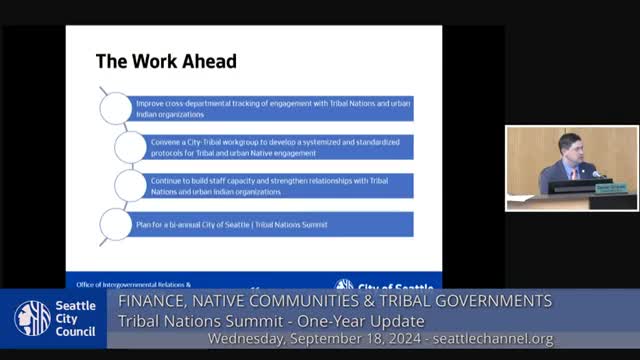
As part of their ongoing efforts, tribal representatives discussed plans for future government-to-government consultations to enhance communication and engagement on these critical issues. They acknowledged the need for a structured agenda in these discussions to ensure meaningful outcomes.
Overall, the meeting served as a platform for reaffirming the tribes' commitment to environmental stewardship and the preservation of their cultural heritage, emphasizing that the health of their communities is intrinsically linked to the health of the waters they depend on.
Don't Miss a Word: See the Full Meeting!
Go beyond summaries. Unlock every video, transcript, and key insight with a Founder Membership.
30-day money-back guarantee
Sponsors
Proudly supported by sponsors who keep Washington articles free in 2026

