China's support for Russia raises global security alarms
September 18, 2024 | Foreign Affairs: House Committee, Standing Committees - House & Senate, Congressional Hearings Compilation, Legislative, Federal
This article was created by AI summarizing key points discussed. AI makes mistakes, so for full details and context, please refer to the video of the full meeting. Please report any errors so we can fix them. Report an error »
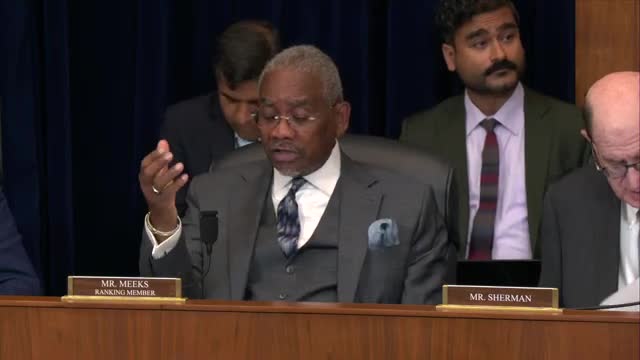
In a recent government meeting, officials expressed deep concerns regarding China's ongoing support for Russia amid the latter's invasion of Ukraine. The discussions highlighted the potential implications of this support not only for Ukraine but also for long-term peace and stability in Europe.
A key focus was on whether China is supplying lethal materials to Russia's military efforts. Officials underscored the importance of building a robust network of alliances, particularly with India, to counteract these developments. They noted that European partners are increasingly collaborating with the U.S. in the Indo-Pacific region, recognizing the interconnectedness of global security challenges.
The meeting also addressed the broader geopolitical landscape, with officials pointing out that North Korea and Iran are also providing military support to Russia. This coalition poses a significant challenge, as it could destabilize Europe in the medium to long term. The U.S. has implemented sanctions against Chinese firms involved in these activities, but officials stressed the need for greater European support in addressing the issue.
Moreover, the discussions emphasized the importance of U.S. resolve in supporting Ukraine, suggesting that the outcome of the conflict could influence perceptions of U.S. deterrence in the Indo-Pacific. Recent military exercises between Russia and China were cited as evidence of their growing cooperation, further complicating the security dynamics in the region.
In legislative developments, the House passed several bills aimed at enhancing U.S. competitiveness against China, including the Export Control Enforcement and Enhancement Act, which seeks to streamline the process for updating the entity list of firms involved in national security threats.
Overall, the meeting underscored the urgent need for a coordinated international response to the challenges posed by the evolving relationship between China and Russia, as well as the implications for global security.
A key focus was on whether China is supplying lethal materials to Russia's military efforts. Officials underscored the importance of building a robust network of alliances, particularly with India, to counteract these developments. They noted that European partners are increasingly collaborating with the U.S. in the Indo-Pacific region, recognizing the interconnectedness of global security challenges.
The meeting also addressed the broader geopolitical landscape, with officials pointing out that North Korea and Iran are also providing military support to Russia. This coalition poses a significant challenge, as it could destabilize Europe in the medium to long term. The U.S. has implemented sanctions against Chinese firms involved in these activities, but officials stressed the need for greater European support in addressing the issue.
Moreover, the discussions emphasized the importance of U.S. resolve in supporting Ukraine, suggesting that the outcome of the conflict could influence perceptions of U.S. deterrence in the Indo-Pacific. Recent military exercises between Russia and China were cited as evidence of their growing cooperation, further complicating the security dynamics in the region.
In legislative developments, the House passed several bills aimed at enhancing U.S. competitiveness against China, including the Export Control Enforcement and Enhancement Act, which seeks to streamline the process for updating the entity list of firms involved in national security threats.
Overall, the meeting underscored the urgent need for a coordinated international response to the challenges posed by the evolving relationship between China and Russia, as well as the implications for global security.
Don't Miss a Word: See the Full Meeting!
Go beyond summaries. Unlock every video, transcript, and key insight with a Founder Membership.
✓
Get instant access to full meeting videos
✓
Search and clip any phrase from complete transcripts
✓
Receive AI-powered summaries & custom alerts
✓
Enjoy lifetime, unrestricted access to government data
30-day money-back guarantee
