US lawmakers demand action against China's tech influence
September 18, 2024 | Foreign Affairs: House Committee, Standing Committees - House & Senate, Congressional Hearings Compilation, Legislative, Federal
This article was created by AI summarizing key points discussed. AI makes mistakes, so for full details and context, please refer to the video of the full meeting. Please report any errors so we can fix them. Report an error »
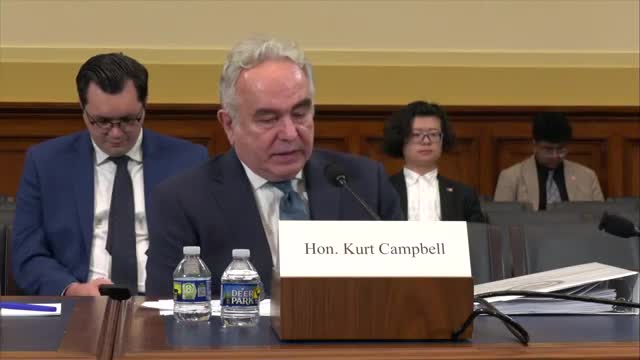
In a recent government meeting, discussions centered on critical issues including U.S.-China trade relations, technology competition, climate change, and the treatment of American citizens abroad.
One of the key topics was the potential for U.S. farmers to sell their products to China, which was supported by several officials who emphasized the quality of American agricultural goods and the logistical capabilities to distribute them globally. This sentiment reflects a broader strategy to enhance trade relations with China amidst ongoing geopolitical tensions.
The meeting also addressed concerns regarding China's technological influence, particularly through companies like Huawei. Officials expressed the need for the U.S. to maintain a competitive edge in technology, especially in 5G, semiconductors, and artificial intelligence. There was a consensus on the importance of safeguarding telecommunications networks from potential security threats posed by foreign technology.
Climate change was another significant topic, with a heated exchange regarding the scientific basis of climate discussions. One congressman called for a more evidence-based dialogue on climate science, questioning the extent of human impact on climate change and advocating for a scientific rather than ideological approach to the issue.
Additionally, the meeting highlighted the case of Tigran Gambarian, an American citizen detained in Nigeria. Lawmakers expressed frustration over the State Department's handling of his case, urging for it to be elevated to the office of the special presidential envoy for hostage affairs, citing his eligibility under the Levinson Act for wrongful detention.
Finally, the meeting touched on the implications of China's trade practices, particularly in relation to Russia. Officials discussed the need for stronger sanctions against Chinese firms aiding Russia's defense capabilities, emphasizing the urgency for coordinated action with European allies to address these strategic challenges.
Overall, the meeting underscored the complexities of U.S.-China relations, the importance of technological leadership, and the need for a unified approach to international issues affecting American citizens and national security.
One of the key topics was the potential for U.S. farmers to sell their products to China, which was supported by several officials who emphasized the quality of American agricultural goods and the logistical capabilities to distribute them globally. This sentiment reflects a broader strategy to enhance trade relations with China amidst ongoing geopolitical tensions.
The meeting also addressed concerns regarding China's technological influence, particularly through companies like Huawei. Officials expressed the need for the U.S. to maintain a competitive edge in technology, especially in 5G, semiconductors, and artificial intelligence. There was a consensus on the importance of safeguarding telecommunications networks from potential security threats posed by foreign technology.
Climate change was another significant topic, with a heated exchange regarding the scientific basis of climate discussions. One congressman called for a more evidence-based dialogue on climate science, questioning the extent of human impact on climate change and advocating for a scientific rather than ideological approach to the issue.
Additionally, the meeting highlighted the case of Tigran Gambarian, an American citizen detained in Nigeria. Lawmakers expressed frustration over the State Department's handling of his case, urging for it to be elevated to the office of the special presidential envoy for hostage affairs, citing his eligibility under the Levinson Act for wrongful detention.
Finally, the meeting touched on the implications of China's trade practices, particularly in relation to Russia. Officials discussed the need for stronger sanctions against Chinese firms aiding Russia's defense capabilities, emphasizing the urgency for coordinated action with European allies to address these strategic challenges.
Overall, the meeting underscored the complexities of U.S.-China relations, the importance of technological leadership, and the need for a unified approach to international issues affecting American citizens and national security.
Don't Miss a Word: See the Full Meeting!
Go beyond summaries. Unlock every video, transcript, and key insight with a Founder Membership.
✓
Get instant access to full meeting videos
✓
Search and clip any phrase from complete transcripts
✓
Receive AI-powered summaries & custom alerts
✓
Enjoy lifetime, unrestricted access to government data
30-day money-back guarantee
