Sound Transit outlines ambitious plans for regional transit expansion
September 20, 2024 | Building Code Council, Governor's Office - Boards & Commissions, Executive, Washington
This article was created by AI summarizing key points discussed. AI makes mistakes, so for full details and context, please refer to the video of the full meeting. Please report any errors so we can fix them. Report an error »
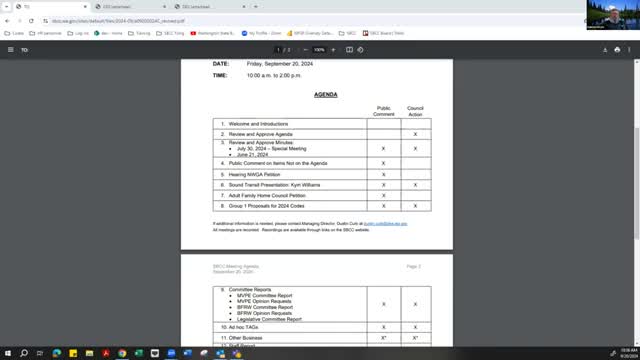
Williams emphasized the unique challenges posed by light rail stations, which require adherence to both national standards and local building codes. The current approach, which relies on one-off solutions like letters of concurrence, has proven inadequate for long-term compliance and consistency across jurisdictions. This has placed a significant burden on local authorities, particularly smaller jurisdictions with limited resources.
To tackle these issues, Williams proposed a partnership with the State Building Code Council (SBCC) to explore code-based solutions that would standardize the regulatory framework for light rail station construction. The proposal includes hiring a qualified plans examination consultant to conduct a technical analysis of applicable codes and to draft modifications for state-level adoption. The goal is to create a uniform application of codes across various jurisdictions, thereby streamlining the design and permitting processes.
The meeting also addressed the importance of collaboration with local authorities and stakeholders, as well as the need for a shared understanding of light rail station design. Council members expressed support for the initiative, recognizing the potential benefits of a more consistent regulatory environment. They also discussed the complexities of integrating land use and zoning codes into the broader conversation, acknowledging the challenges posed by local governance structures.
Next steps outlined by Williams include forming a stakeholder group, initiating outreach to affected cities, and preparing a timeline for onboarding the plans examination consultant, with the aim of having a package of code prescriptions ready for the 2027 code cycle. The meeting concluded with a commitment to further discussions on how to effectively implement these proposals while considering the diverse needs of the region's jurisdictions.
Don't Miss a Word: See the Full Meeting!
Go beyond summaries. Unlock every video, transcript, and key insight with a Founder Membership.
30-day money-back guarantee
Sponsors
Proudly supported by sponsors who keep Washington articles free in 2026

