Congressional Hearing Reveals FAFSA Failures Harming Students
September 24, 2024 | Education and Labor: House Committee, Standing Committees - House & Senate, Congressional Hearings Compilation, Legislative, Federal
This article was created by AI summarizing key points discussed. AI makes mistakes, so for full details and context, please refer to the video of the full meeting. Please report any errors so we can fix them. Report an error »
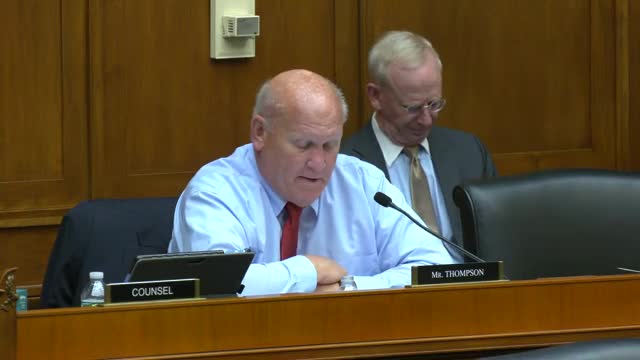
In a recent congressional meeting, lawmakers expressed deep concerns over the ongoing challenges surrounding the Free Application for Federal Student Aid (FAFSA) process, particularly as families face significant financial pressures and workforce shortages. The discussions highlighted the Department of Education's failure to effectively communicate changes in aid eligibility, leaving many students uncertain about their financial support for postsecondary education.
Witnesses testified that the lack of transparency regarding federal aid estimates has severely impacted students' ability to plan for college expenses. Delays in processing financial aid forms resulted in colleges being unable to provide timely financial aid information, forcing students—especially those from low-income backgrounds—to make college commitments without knowing their potential aid packages. This situation is particularly troubling given the current economic climate, where inflation and declining real wages are straining family budgets.
The meeting also addressed the complications arising from new asset calculations introduced in the simplified FAFSA. Lawmakers noted that these changes have disproportionately affected farmers, who are often asset-rich but cash-poor. The transition from revenue-based to asset-based calculations has raised concerns about the feasibility of funding higher education while maintaining agricultural operations.
As the Department of Education prepares for the release of the 2025-2026 FAFSA form, lawmakers are urging a bipartisan effort to rectify these issues. They emphasized the need for accountability and improvements in the FAFSA system to ensure that students can access the financial aid necessary for their education. The committee plans to conduct further investigations into the effects of the recent statutory changes on various demographics, including family farms, to better understand who benefits and who is disadvantaged by the new regulations.
Witnesses testified that the lack of transparency regarding federal aid estimates has severely impacted students' ability to plan for college expenses. Delays in processing financial aid forms resulted in colleges being unable to provide timely financial aid information, forcing students—especially those from low-income backgrounds—to make college commitments without knowing their potential aid packages. This situation is particularly troubling given the current economic climate, where inflation and declining real wages are straining family budgets.
The meeting also addressed the complications arising from new asset calculations introduced in the simplified FAFSA. Lawmakers noted that these changes have disproportionately affected farmers, who are often asset-rich but cash-poor. The transition from revenue-based to asset-based calculations has raised concerns about the feasibility of funding higher education while maintaining agricultural operations.
As the Department of Education prepares for the release of the 2025-2026 FAFSA form, lawmakers are urging a bipartisan effort to rectify these issues. They emphasized the need for accountability and improvements in the FAFSA system to ensure that students can access the financial aid necessary for their education. The committee plans to conduct further investigations into the effects of the recent statutory changes on various demographics, including family farms, to better understand who benefits and who is disadvantaged by the new regulations.
Don't Miss a Word: See the Full Meeting!
Go beyond summaries. Unlock every video, transcript, and key insight with a Founder Membership.
✓
Get instant access to full meeting videos
✓
Search and clip any phrase from complete transcripts
✓
Receive AI-powered summaries & custom alerts
✓
Enjoy lifetime, unrestricted access to government data
30-day money-back guarantee
