Energy Crisis Unleashed by Government Green Policies
September 19, 2024 | Budget: House Committee, Standing Committees - House & Senate, Congressional Hearings Compilation, Legislative, Federal
This article was created by AI summarizing key points discussed. AI makes mistakes, so for full details and context, please refer to the video of the full meeting. Please report any errors so we can fix them. Report an error »
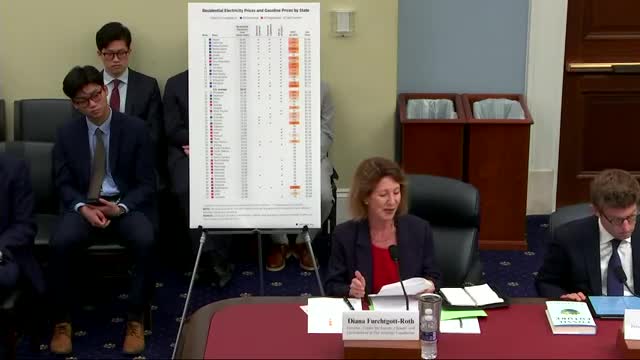
During a recent government meeting, experts and advocates voiced strong criticisms of the Biden administration's green energy policies, arguing that they are leading to increased costs and energy insecurity for American households. The discussions highlighted the financial burden placed on consumers, particularly low-income families, as they face rising utility bills and the challenges of transitioning to electric vehicles (EVs).
Dr. Kevin Dayaratna from the Heritage Foundation presented alarming projections, estimating that the U.S. economy could lose over $7.7 trillion in GDP by 2040 if current greenhouse gas reduction goals are pursued. He emphasized that even a complete shift away from fossil fuels would result in only a minimal decrease in global temperatures, questioning the efficacy of such drastic measures.
Energy expert Alex Epstein criticized what he termed \"government dictated green energy,\" asserting that policies aimed at reducing fossil fuel use have led to higher energy prices and less reliable electricity. He argued that these policies have created an artificial scarcity of fossil fuels, which has driven up costs for consumers and businesses alike. Epstein warned that if the administration's plans to achieve net-zero emissions by 2050 are fully implemented, the consequences could be dire, particularly for agriculture and food security.
Donna Jackson, representing the Project 21 Black Leadership Network, echoed these concerns, highlighting how green policies disproportionately affect low-income households. She pointed out that new regulations and building codes aimed at promoting green energy could add significant costs to homeownership, making it more difficult for families to achieve economic stability. Jackson also criticized the push for EVs, arguing that they are not a viable option for many working-class families due to their higher costs and limited infrastructure.
The meeting underscored a growing divide in energy policy perspectives, with advocates for traditional energy sources calling for a more balanced approach that prioritizes affordability and reliability. As the U.S. navigates its energy future, the implications of these discussions could shape the ongoing debate over the best path forward for energy production and consumption in the country.
Dr. Kevin Dayaratna from the Heritage Foundation presented alarming projections, estimating that the U.S. economy could lose over $7.7 trillion in GDP by 2040 if current greenhouse gas reduction goals are pursued. He emphasized that even a complete shift away from fossil fuels would result in only a minimal decrease in global temperatures, questioning the efficacy of such drastic measures.
Energy expert Alex Epstein criticized what he termed \"government dictated green energy,\" asserting that policies aimed at reducing fossil fuel use have led to higher energy prices and less reliable electricity. He argued that these policies have created an artificial scarcity of fossil fuels, which has driven up costs for consumers and businesses alike. Epstein warned that if the administration's plans to achieve net-zero emissions by 2050 are fully implemented, the consequences could be dire, particularly for agriculture and food security.
Donna Jackson, representing the Project 21 Black Leadership Network, echoed these concerns, highlighting how green policies disproportionately affect low-income households. She pointed out that new regulations and building codes aimed at promoting green energy could add significant costs to homeownership, making it more difficult for families to achieve economic stability. Jackson also criticized the push for EVs, arguing that they are not a viable option for many working-class families due to their higher costs and limited infrastructure.
The meeting underscored a growing divide in energy policy perspectives, with advocates for traditional energy sources calling for a more balanced approach that prioritizes affordability and reliability. As the U.S. navigates its energy future, the implications of these discussions could shape the ongoing debate over the best path forward for energy production and consumption in the country.
Don't Miss a Word: See the Full Meeting!
Go beyond summaries. Unlock every video, transcript, and key insight with a Founder Membership.
✓
Get instant access to full meeting videos
✓
Search and clip any phrase from complete transcripts
✓
Receive AI-powered summaries & custom alerts
✓
Enjoy lifetime, unrestricted access to government data
30-day money-back guarantee
