Ambassador warns of unprecedented national security threats
September 18, 2024 | Armed Services: House Committee, Standing Committees - House & Senate, Congressional Hearings Compilation, Legislative, Federal
This article was created by AI summarizing key points discussed. AI makes mistakes, so for full details and context, please refer to the video of the full meeting. Please report any errors so we can fix them. Report an error »
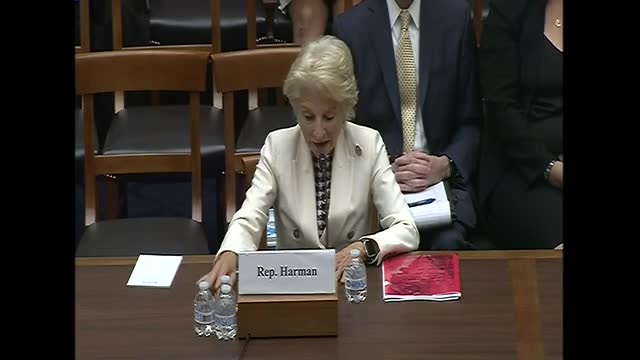
In a recent government meeting, officials underscored the escalating threats to U.S. national security, asserting that the current landscape is more perilous than at any time since the Cold War and possibly since World War II. Ambassador Eric Edelman emphasized the urgent need for significant action, criticizing the government's slow response and risk-averse nature, particularly within the Department of Defense (DOD).
Edelman, who has served on multiple defense commissions, highlighted a troubling trend: despite warnings over the past decade about declining defense resources and increasing global threats, the U.S. has failed to adapt effectively. He pointed to a concerning partnership among adversaries such as China, Russia, Iran, and North Korea, which he believes enhances their military and diplomatic strength while undermining U.S. capabilities.
The meeting also addressed the inadequacies of the current military strategy, which is primarily focused on a single theater of conflict. With ongoing wars in two priority regions and the looming threat of a third in the Indo-Pacific, Edelman argued that the U.S. must adopt a multi-theater military approach to deter potential conflicts effectively.
Edelman warned that as China continues to modernize its military and infiltrate U.S. critical infrastructure, the risks to American security are growing. He noted that the public remains largely unaware of these threats, and the government is not sufficiently organized to counter them.
The commission's report includes actionable recommendations, including better integration of commercial technology and strategic investments to restore the U.S. military's qualitative edge. However, delays in appropriations bills threaten the implementation of these crucial measures.
The meeting concluded with a call for bipartisan leadership to address these pressing issues, emphasizing the need for a cohesive national security strategy that transcends bureaucratic silos within both the executive and legislative branches.
Edelman, who has served on multiple defense commissions, highlighted a troubling trend: despite warnings over the past decade about declining defense resources and increasing global threats, the U.S. has failed to adapt effectively. He pointed to a concerning partnership among adversaries such as China, Russia, Iran, and North Korea, which he believes enhances their military and diplomatic strength while undermining U.S. capabilities.
The meeting also addressed the inadequacies of the current military strategy, which is primarily focused on a single theater of conflict. With ongoing wars in two priority regions and the looming threat of a third in the Indo-Pacific, Edelman argued that the U.S. must adopt a multi-theater military approach to deter potential conflicts effectively.
Edelman warned that as China continues to modernize its military and infiltrate U.S. critical infrastructure, the risks to American security are growing. He noted that the public remains largely unaware of these threats, and the government is not sufficiently organized to counter them.
The commission's report includes actionable recommendations, including better integration of commercial technology and strategic investments to restore the U.S. military's qualitative edge. However, delays in appropriations bills threaten the implementation of these crucial measures.
The meeting concluded with a call for bipartisan leadership to address these pressing issues, emphasizing the need for a cohesive national security strategy that transcends bureaucratic silos within both the executive and legislative branches.
Don't Miss a Word: See the Full Meeting!
Go beyond summaries. Unlock every video, transcript, and key insight with a Founder Membership.
✓
Get instant access to full meeting videos
✓
Search and clip any phrase from complete transcripts
✓
Receive AI-powered summaries & custom alerts
✓
Enjoy lifetime, unrestricted access to government data
30-day money-back guarantee
