Harris struggles to unify diverse voter base in campaign
This article was created by AI summarizing key points discussed. AI makes mistakes, so for full details and context, please refer to the video of the full meeting. Please report any errors so we can fix them. Report an error »
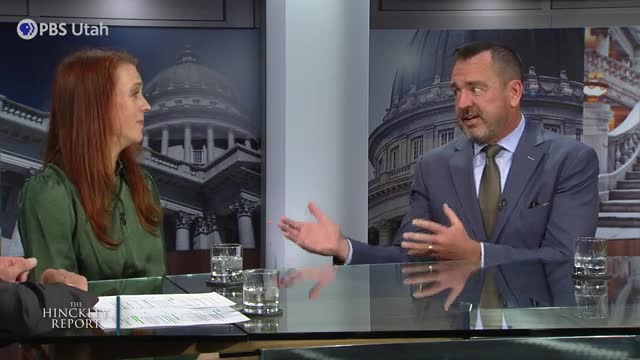
In a recent government meeting, discussions centered around the political strategies of the Democratic nominee, particularly in relation to her stance on key issues such as the Green New Deal, fracking, and foreign policy. Critics highlighted that the nominee appears to be shifting her positions to appeal to different voter bases in critical battleground states like Pennsylvania and Michigan.
The nominee's support for fracking and oil drilling in Pennsylvania was noted as a strategic move to win over voters in that state, despite her previous alignment with more progressive environmental policies. This inconsistency raises questions about her ability to articulate a cohesive platform, especially as she navigates the complex dynamics of appealing to both pro-Israel and pro-Palestinian factions within her party.
The conversation underscored the challenges faced by the nominee in balancing the diverse objectives of her voter base, which extends beyond mere opposition to former President Trump. Observers expressed skepticism about whether the nominee would embrace a more centrist position as new information emerges, suggesting that her current approach may reflect a deeper struggle to unify her supporters.
Overall, the meeting highlighted the intricate political landscape as the election approaches, with candidates needing to adapt their messages to resonate with a wide array of constituents while maintaining their core principles.
The nominee's support for fracking and oil drilling in Pennsylvania was noted as a strategic move to win over voters in that state, despite her previous alignment with more progressive environmental policies. This inconsistency raises questions about her ability to articulate a cohesive platform, especially as she navigates the complex dynamics of appealing to both pro-Israel and pro-Palestinian factions within her party.
The conversation underscored the challenges faced by the nominee in balancing the diverse objectives of her voter base, which extends beyond mere opposition to former President Trump. Observers expressed skepticism about whether the nominee would embrace a more centrist position as new information emerges, suggesting that her current approach may reflect a deeper struggle to unify her supporters.
Overall, the meeting highlighted the intricate political landscape as the election approaches, with candidates needing to adapt their messages to resonate with a wide array of constituents while maintaining their core principles.
Don't Miss a Word: See the Full Meeting!
Go beyond summaries. Unlock every video, transcript, and key insight with a Founder Membership.
✓
Get instant access to full meeting videos
✓
Search and clip any phrase from complete transcripts
✓
Receive AI-powered summaries & custom alerts
✓
Enjoy lifetime, unrestricted access to government data
30-day money-back guarantee
