World Health Organization Faces Credibility Crisis Over COVID Origins
September 09, 2024 | Rules: House Committee, Standing Committees - House & Senate, Congressional Hearings Compilation, Legislative, Federal
This article was created by AI summarizing key points discussed. AI makes mistakes, so for full details and context, please refer to the video of the full meeting. Please report any errors so we can fix them. Report an error »
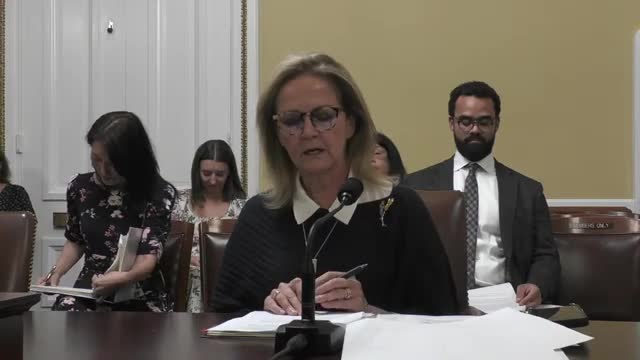
In a recent government meeting, discussions centered around the implications of a proposed treaty related to global health responses, with significant debate on its classification and the role of the World Health Organization (WHO).
One representative emphasized that the agreement should be treated as a treaty, requiring Senate confirmation, contrasting it with the previous administration's handling of the Joint Comprehensive Plan of Action (JCPOA) regarding Iran, which was executed through executive action without the necessary treaty process. This representative expressed concerns about the consequences of bypassing the treaty framework, citing a deterioration in U.S. relations with Iran as a result of the JCPOA.
Another member of the committee highlighted the treaty's potential to enhance global health coordination, improve the distribution of medical resources, and provide funding to WHO member states. However, this perspective was met with skepticism from other representatives who questioned the credibility of the WHO, particularly in light of its handling of Taiwan's participation during past health crises and its recent decision to halt further investigations into the origins of COVID-19 in China.
The meeting underscored a divide among lawmakers regarding the effectiveness and governance of international health organizations, with some advocating for a more robust U.S. role in global health initiatives while others expressed concerns about sovereignty and the influence of foreign entities on domestic policy. As the committee moves forward, the discussions will likely shape the U.S. approach to international health treaties and collaborations.
One representative emphasized that the agreement should be treated as a treaty, requiring Senate confirmation, contrasting it with the previous administration's handling of the Joint Comprehensive Plan of Action (JCPOA) regarding Iran, which was executed through executive action without the necessary treaty process. This representative expressed concerns about the consequences of bypassing the treaty framework, citing a deterioration in U.S. relations with Iran as a result of the JCPOA.
Another member of the committee highlighted the treaty's potential to enhance global health coordination, improve the distribution of medical resources, and provide funding to WHO member states. However, this perspective was met with skepticism from other representatives who questioned the credibility of the WHO, particularly in light of its handling of Taiwan's participation during past health crises and its recent decision to halt further investigations into the origins of COVID-19 in China.
The meeting underscored a divide among lawmakers regarding the effectiveness and governance of international health organizations, with some advocating for a more robust U.S. role in global health initiatives while others expressed concerns about sovereignty and the influence of foreign entities on domestic policy. As the committee moves forward, the discussions will likely shape the U.S. approach to international health treaties and collaborations.
View the Full Meeting & All Its Details
This article offers just a summary. Unlock complete video, transcripts, and insights as a Founder Member.
✓
Watch full, unedited meeting videos
✓
Search every word spoken in unlimited transcripts
✓
AI summaries & real-time alerts (all government levels)
✓
Permanent access to expanding government content
30-day money-back guarantee
