Voter Transparency Crisis Sparks Outrage in Congress
September 11, 2024 | House Administration: House Committee, Standing Committees - House & Senate, Congressional Hearings Compilation, Legislative, Federal
This article was created by AI summarizing key points discussed. AI makes mistakes, so for full details and context, please refer to the video of the full meeting. Please report any errors so we can fix them. Report an error »
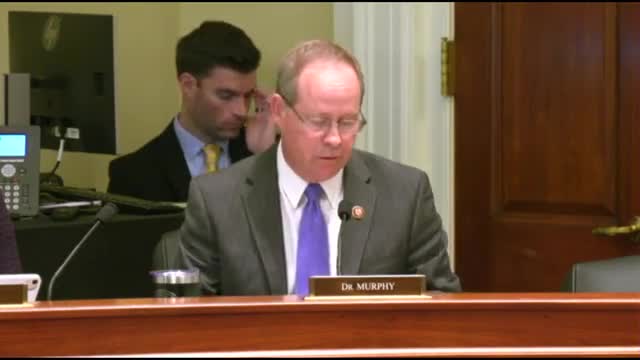
During a recent government meeting, significant discussions emerged surrounding transparency in government operations, voter registration processes, and election preparedness in the event of mass casualty incidents.
A notable point of contention arose when a member criticized the notion of \"frivolous\" Freedom of Information Act (FOIA) requests, emphasizing that such requests are essential for maintaining a transparent government. The member expressed frustration over the lack of responsiveness from institutions like the FBI, suggesting that this lack of transparency contributes to public distrust and voter dissatisfaction.
The conversation shifted to voter registration, particularly regarding the accessibility of services for veterans. Concerns were raised about the perceived partisan nature of voter registration efforts, with accusations that these initiatives disproportionately favor Democratic districts. The dialogue highlighted a broader sentiment of skepticism towards the administration's commitment to impartiality in electoral processes.
The issue of deceased individuals remaining on voter rolls was also addressed, with one member questioning the effectiveness of current measures to maintain accurate voter registration. The response indicated that while efforts are made to remove deceased individuals, challenges persist, raising questions about the integrity of voter lists.
Voter identification laws were another focal point, with a member advocating for stricter ID requirements, arguing that such measures do not suppress voter turnout as critics claim. This perspective was countered by assertions that existing identification processes in states like New Mexico already accommodate various forms of voter verification.
In a shift to a different topic, Congressman Kilmer raised concerns about the preparedness of state governments to ensure continuity in the event of mass casualty events affecting Congress. He emphasized the need for predictable funding and resources to facilitate voting during crises. The committee is collaborating with the Government Accountability Office (GAO) to assess state readiness for special elections following such events, with a focus on the feasibility of the current 49-day requirement for holding elections after a mass casualty incident.
Secretary Toulouse Oliver of New Mexico shared insights on the state's recent modifications to special election laws, indicating that a 100-day timeframe is more realistic for ensuring well-prepared elections. She expressed skepticism about the practicality of the 49-day requirement, citing logistical challenges in managing absentee ballots and ensuring voter readiness.
Overall, the meeting underscored ongoing tensions regarding electoral integrity, transparency, and the need for effective crisis management in the electoral process, reflecting broader national concerns about governance and public trust.
A notable point of contention arose when a member criticized the notion of \"frivolous\" Freedom of Information Act (FOIA) requests, emphasizing that such requests are essential for maintaining a transparent government. The member expressed frustration over the lack of responsiveness from institutions like the FBI, suggesting that this lack of transparency contributes to public distrust and voter dissatisfaction.
The conversation shifted to voter registration, particularly regarding the accessibility of services for veterans. Concerns were raised about the perceived partisan nature of voter registration efforts, with accusations that these initiatives disproportionately favor Democratic districts. The dialogue highlighted a broader sentiment of skepticism towards the administration's commitment to impartiality in electoral processes.
The issue of deceased individuals remaining on voter rolls was also addressed, with one member questioning the effectiveness of current measures to maintain accurate voter registration. The response indicated that while efforts are made to remove deceased individuals, challenges persist, raising questions about the integrity of voter lists.
Voter identification laws were another focal point, with a member advocating for stricter ID requirements, arguing that such measures do not suppress voter turnout as critics claim. This perspective was countered by assertions that existing identification processes in states like New Mexico already accommodate various forms of voter verification.
In a shift to a different topic, Congressman Kilmer raised concerns about the preparedness of state governments to ensure continuity in the event of mass casualty events affecting Congress. He emphasized the need for predictable funding and resources to facilitate voting during crises. The committee is collaborating with the Government Accountability Office (GAO) to assess state readiness for special elections following such events, with a focus on the feasibility of the current 49-day requirement for holding elections after a mass casualty incident.
Secretary Toulouse Oliver of New Mexico shared insights on the state's recent modifications to special election laws, indicating that a 100-day timeframe is more realistic for ensuring well-prepared elections. She expressed skepticism about the practicality of the 49-day requirement, citing logistical challenges in managing absentee ballots and ensuring voter readiness.
Overall, the meeting underscored ongoing tensions regarding electoral integrity, transparency, and the need for effective crisis management in the electoral process, reflecting broader national concerns about governance and public trust.
Don't Miss a Word: See the Full Meeting!
Go beyond summaries. Unlock every video, transcript, and key insight with a Founder Membership.
✓
Get instant access to full meeting videos
✓
Search and clip any phrase from complete transcripts
✓
Receive AI-powered summaries & custom alerts
✓
Enjoy lifetime, unrestricted access to government data
30-day money-back guarantee
