China's Influence Grows in Eastern Europe Amid Tensions
September 11, 2024 | Foreign Affairs: House Committee, Standing Committees - House & Senate, Congressional Hearings Compilation, Legislative, Federal
This article was created by AI summarizing key points discussed. AI makes mistakes, so for full details and context, please refer to the video of the full meeting. Please report any errors so we can fix them. Report an error »
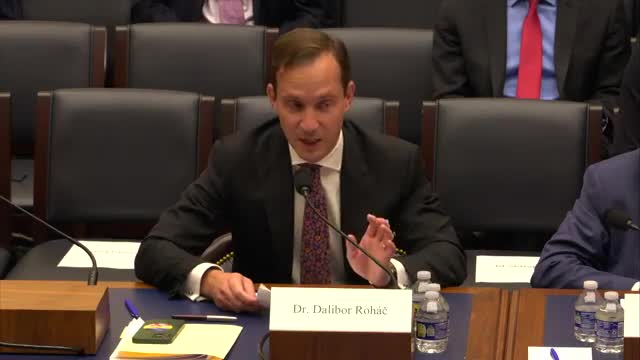
In a recent government meeting, discussions highlighted the contrasting geopolitical alignments of Eastern European countries regarding their relationships with the United States and China. Lithuania and the Czech Republic have notably strengthened their ties with the U.S., particularly in relation to Taiwan, with high-profile visits from Czech parliamentary leaders provoking backlash from China. Lithuania has faced an import ban from China following its own diplomatic advancements with Taiwan.
Conversely, Hungary and Serbia are deepening their connections with China. Hungarian Prime Minister Viktor Orban has positioned Hungary as a key player in China's Belt and Road Initiative, having previously criticized U.S. initiatives. In 2022, China emerged as the largest foreign investor in Hungary, accounting for 44% of all Chinese foreign direct investment in Europe. A significant development includes the planned establishment of a major battery plant by Chinese manufacturer CATL in Debrecen, with an investment of up to $8 billion.
Serbia has also strengthened its ties with China, receiving substantial investments in various sectors, including steel, mining, and infrastructure. Chinese loans have significantly impacted Serbia's public debt, contributing approximately €3.7 billion. The country has also acquired military equipment from China, becoming the largest supplier to the Serbian military in 2022.
These developments illustrate a complex and diverse regional landscape, where countries like Montenegro and North Macedonia are increasingly reliant on Chinese loans for infrastructure projects, despite not necessarily harboring anti-Western sentiments. Currently, China holds 40% of Montenegro's external public debt and 20% of North Macedonia's, indicating a growing influence in the region.
Conversely, Hungary and Serbia are deepening their connections with China. Hungarian Prime Minister Viktor Orban has positioned Hungary as a key player in China's Belt and Road Initiative, having previously criticized U.S. initiatives. In 2022, China emerged as the largest foreign investor in Hungary, accounting for 44% of all Chinese foreign direct investment in Europe. A significant development includes the planned establishment of a major battery plant by Chinese manufacturer CATL in Debrecen, with an investment of up to $8 billion.
Serbia has also strengthened its ties with China, receiving substantial investments in various sectors, including steel, mining, and infrastructure. Chinese loans have significantly impacted Serbia's public debt, contributing approximately €3.7 billion. The country has also acquired military equipment from China, becoming the largest supplier to the Serbian military in 2022.
These developments illustrate a complex and diverse regional landscape, where countries like Montenegro and North Macedonia are increasingly reliant on Chinese loans for infrastructure projects, despite not necessarily harboring anti-Western sentiments. Currently, China holds 40% of Montenegro's external public debt and 20% of North Macedonia's, indicating a growing influence in the region.
Don't Miss a Word: See the Full Meeting!
Go beyond summaries. Unlock every video, transcript, and key insight with a Founder Membership.
✓
Get instant access to full meeting videos
✓
Search and clip any phrase from complete transcripts
✓
Receive AI-powered summaries & custom alerts
✓
Enjoy lifetime, unrestricted access to government data
30-day money-back guarantee
