Republicans challenge ESG standards in heated congressional hearing
September 10, 2024 | Financial Services: House Committee, Standing Committees - House & Senate, Congressional Hearings Compilation, Legislative, Federal
This article was created by AI summarizing key points discussed. AI makes mistakes, so for full details and context, please refer to the video of the full meeting. Please report any errors so we can fix them. Report an error »
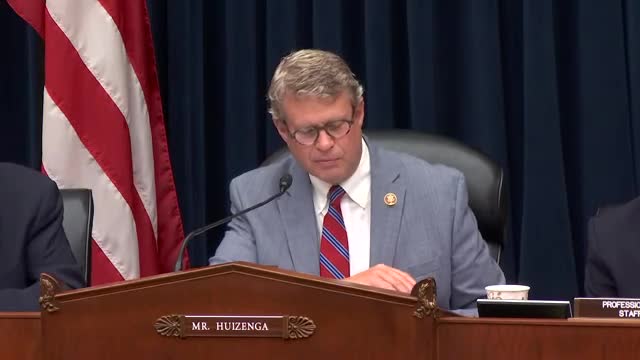
In a recent government hearing, a heated debate emerged over the role of Environmental, Social, and Governance (ESG) metrics in financial reporting and the influence of proxy advisory firms. Republican representatives criticized the current approach, arguing that it undermines traditional government structures and transforms the financial system into a political arena. They presented three main points:
Firstly, they contended that the inclusion of ESG metrics complicates investment decisions and diverts companies from their primary financial objectives to appease climate activists. Secondly, they challenged the notion that ESG-focused funds outperform traditional portfolios, asserting that this claim is unfounded. Lastly, they raised concerns about conflicts of interest within the proxy advisory industry, claiming that it lacks transparency and accountability, ultimately failing to promote long-term shareholder value.
The Republicans expressed alarm over the concentration of power among the two largest proxy advisory firms, which they claim control approximately 97% of the market. They argued that these firms, alongside a politicized Securities and Exchange Commission (SEC), have adopted a one-size-fits-all approach that promotes a liberal social agenda, potentially increasing costs and regulatory burdens for companies and investors alike.
In response, Democratic representatives, including Texas Congressman Al Green, countered that the hearing's focus should be on how some Republicans may inadvertently seek to limit investors' access to crucial information regarding material risks associated with their investments. This exchange highlights the ongoing tension between differing political ideologies regarding corporate governance and investor rights, setting the stage for further discussions on the future of ESG standards and the role of proxy advisors in the financial landscape.
Firstly, they contended that the inclusion of ESG metrics complicates investment decisions and diverts companies from their primary financial objectives to appease climate activists. Secondly, they challenged the notion that ESG-focused funds outperform traditional portfolios, asserting that this claim is unfounded. Lastly, they raised concerns about conflicts of interest within the proxy advisory industry, claiming that it lacks transparency and accountability, ultimately failing to promote long-term shareholder value.
The Republicans expressed alarm over the concentration of power among the two largest proxy advisory firms, which they claim control approximately 97% of the market. They argued that these firms, alongside a politicized Securities and Exchange Commission (SEC), have adopted a one-size-fits-all approach that promotes a liberal social agenda, potentially increasing costs and regulatory burdens for companies and investors alike.
In response, Democratic representatives, including Texas Congressman Al Green, countered that the hearing's focus should be on how some Republicans may inadvertently seek to limit investors' access to crucial information regarding material risks associated with their investments. This exchange highlights the ongoing tension between differing political ideologies regarding corporate governance and investor rights, setting the stage for further discussions on the future of ESG standards and the role of proxy advisors in the financial landscape.
View the Full Meeting & All Its Details
This article offers just a summary. Unlock complete video, transcripts, and insights as a Founder Member.
✓
Watch full, unedited meeting videos
✓
Search every word spoken in unlimited transcripts
✓
AI summaries & real-time alerts (all government levels)
✓
Permanent access to expanding government content
30-day money-back guarantee
