Lawmakers clash over child welfare and education reforms
September 11, 2024 | Education and Labor: House Committee, Standing Committees - House & Senate, Congressional Hearings Compilation, Legislative, Federal
This article was created by AI summarizing key points discussed. AI makes mistakes, so for full details and context, please refer to the video of the full meeting. Please report any errors so we can fix them. Report an error »
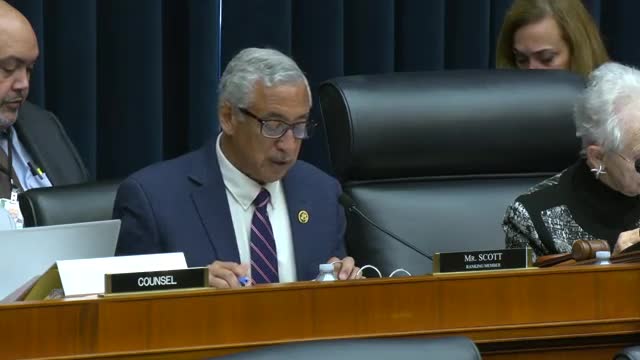
During a recent government meeting, representatives discussed several key legislative proposals aimed at addressing child welfare, healthcare practices, and educational policies.
One of the primary topics was the reauthorization of the Child Abuse Prevention and Treatment Act (CAPTA), which seeks to enhance resources for community-based child abuse prevention services. Despite previous bipartisan support in Congress, the reauthorization has yet to become law. A specific proposal, the Jenna Quinn Law, aims to empower the Secretary of Health and Human Services to fund projects focused on preventing child sexual abuse. However, concerns were raised that this legislation does not allocate new funding for these initiatives. An amendment was proposed to establish a nationwide interstate data exchange to improve caseworker access to family histories within the child welfare system.
The meeting also addressed the controversial Protect Act, which would require parental consent for schools to refer to students by names other than those on their birth certificates. Critics argued that this legislation could create unnecessary bureaucracy and foster distrust between parents and schools, detracting from more pressing issues such as gun violence in schools.
Additionally, a resolution was discussed to nullify a Department of Labor regulation from the Trump administration regarding associated health plans. The current administration's rule aims to clarify compliance with a federal court ruling, but some representatives criticized the resolution as a waste of time that would reinstate an ineffective regulation.
The Healthy Competition for a Better Care Act was also on the agenda, targeting anticompetitive practices in healthcare. While the bill aims to improve patient care and worker wages, concerns were raised about potential loopholes that could undermine its effectiveness.
Lastly, the Transparent Telehealth Bills Act of 2024 was reviewed, focusing on prohibiting unnecessary facility fees charged by healthcare providers. While the bill aims to protect consumers, it was noted that it does not prevent providers from imposing these fees, prompting calls for amendments to enhance consumer protections.
Overall, the discussions highlighted a mix of legislative priorities, with a clear call for more comprehensive approaches to pressing issues in child welfare and healthcare.
One of the primary topics was the reauthorization of the Child Abuse Prevention and Treatment Act (CAPTA), which seeks to enhance resources for community-based child abuse prevention services. Despite previous bipartisan support in Congress, the reauthorization has yet to become law. A specific proposal, the Jenna Quinn Law, aims to empower the Secretary of Health and Human Services to fund projects focused on preventing child sexual abuse. However, concerns were raised that this legislation does not allocate new funding for these initiatives. An amendment was proposed to establish a nationwide interstate data exchange to improve caseworker access to family histories within the child welfare system.
The meeting also addressed the controversial Protect Act, which would require parental consent for schools to refer to students by names other than those on their birth certificates. Critics argued that this legislation could create unnecessary bureaucracy and foster distrust between parents and schools, detracting from more pressing issues such as gun violence in schools.
Additionally, a resolution was discussed to nullify a Department of Labor regulation from the Trump administration regarding associated health plans. The current administration's rule aims to clarify compliance with a federal court ruling, but some representatives criticized the resolution as a waste of time that would reinstate an ineffective regulation.
The Healthy Competition for a Better Care Act was also on the agenda, targeting anticompetitive practices in healthcare. While the bill aims to improve patient care and worker wages, concerns were raised about potential loopholes that could undermine its effectiveness.
Lastly, the Transparent Telehealth Bills Act of 2024 was reviewed, focusing on prohibiting unnecessary facility fees charged by healthcare providers. While the bill aims to protect consumers, it was noted that it does not prevent providers from imposing these fees, prompting calls for amendments to enhance consumer protections.
Overall, the discussions highlighted a mix of legislative priorities, with a clear call for more comprehensive approaches to pressing issues in child welfare and healthcare.
View the Full Meeting & All Its Details
This article offers just a summary. Unlock complete video, transcripts, and insights as a Founder Member.
✓
Watch full, unedited meeting videos
✓
Search every word spoken in unlimited transcripts
✓
AI summaries & real-time alerts (all government levels)
✓
Permanent access to expanding government content
30-day money-back guarantee
