Council debates controversial ADU permit regulations
September 03, 2024 | Provo City Council, Provo, Utah County, Utah
This article was created by AI summarizing key points discussed. AI makes mistakes, so for full details and context, please refer to the video of the full meeting. Please report any errors so we can fix them. Report an error »
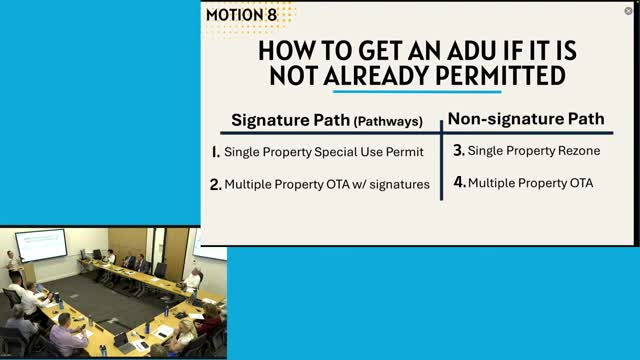
Key points of contention included the permanence of the permits, with members noting that special use permits do not transfer with the property, meaning new owners would need to reapply. This distinction was highlighted as a significant factor in the decision-making process, as it allows for more localized control while also potentially complicating future property transactions.
Councilor Travis expressed support for the single property special use permit, emphasizing its importance for homeowners facing financial difficulties. He argued that such a pathway provides necessary flexibility for individuals who may need to rent out parts of their homes to manage economic challenges. Other council members echoed his sentiments, sharing personal anecdotes that underscored the real-life implications of housing instability.
However, dissenting voices raised concerns about the potential for neighborhood discord and the administrative burden of managing these permits. Some councilors argued that the current system has led to increased tensions within communities, with neighbors feeling pressured to support applications that may not align with their preferences.
The discussion also touched on broader economic trends, with council members noting that many homeowners are \"stuck\" in their properties due to low interest rates, making it difficult for them to move or adapt their living situations. This context was deemed critical in evaluating the need for flexible housing solutions like ADUs.
Ultimately, the council debated whether to maintain the existing special use permit framework or to consider adjustments, such as lowering the percentage of neighborhood support required for approval. The meeting concluded with a motion to retain the current system while allowing for further discussion on potential modifications, reflecting the council's ongoing commitment to balancing community needs with individual homeowner rights.
View the Full Meeting & All Its Details
This article offers just a summary. Unlock complete video, transcripts, and insights as a Founder Member.
30-day money-back guarantee
Sponsors
Proudly supported by sponsors who keep Utah articles free in 2026

