Residents rally against development threatening gopher tortoise habitat
September 10, 2024 | Charlotte County, Florida
This article was created by AI summarizing key points discussed. AI makes mistakes, so for full details and context, please refer to the video of the full meeting. Please report any errors so we can fix them. Report an error »
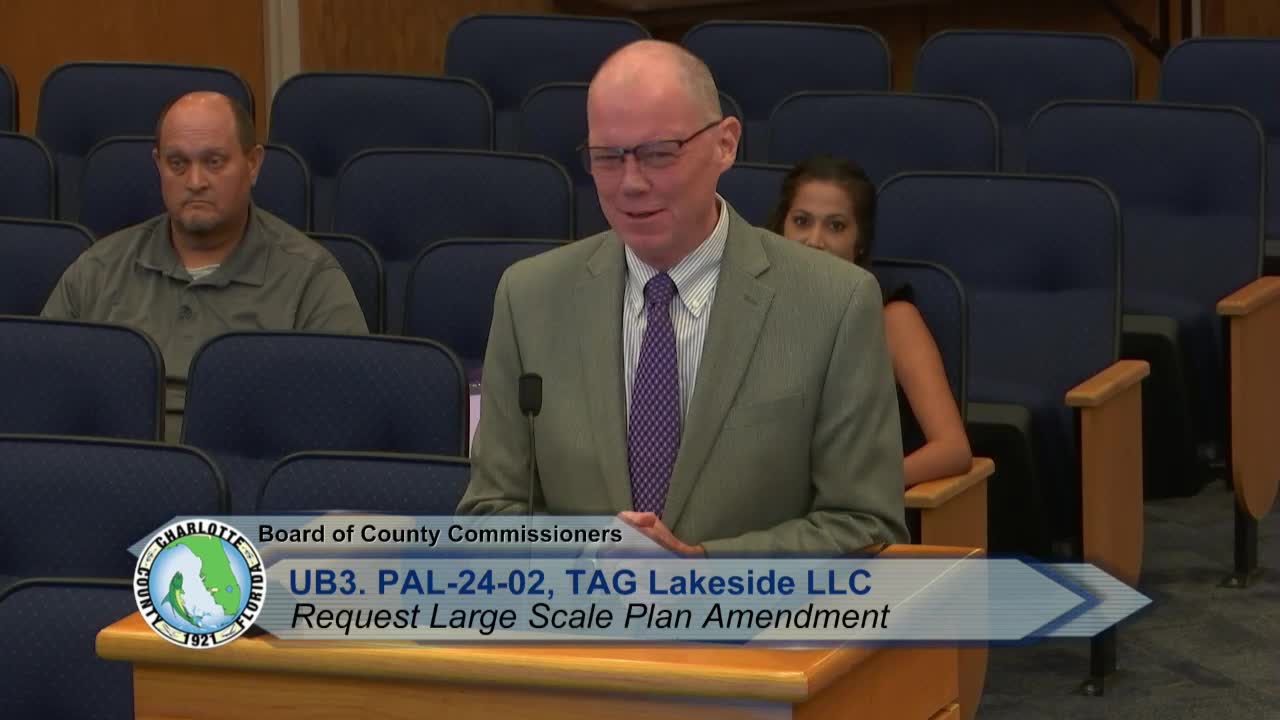
The proposal aims to address concerns regarding the gopher tortoise population on the site, with nearly half of the tortoises currently residing in designated preserve areas. Bernsen assured that any necessary relocations would be managed in compliance with environmental regulations, emphasizing that denying the amendment could lead to a larger number of tortoises needing relocation from non-preserve areas.
Concerns were raised about the local utility situation, as the current water and sewer provider is in receivership. The board confirmed that the proposed plan does not obligate Charlotte County utilities to provide water services, and any changes to utility provisions would require further modifications to the development plan.
Public input revealed strong opposition to the development, particularly from residents concerned about the impact on gopher tortoises and local ecosystems. Courtney Mason, a local resident and conservation advocate, expressed her fears about the potential destruction of tortoise habitats and urged for stricter regulations on development in areas with significant wildlife populations. She proposed that the county implement alerts for building permits on land known to host gopher tortoises and conduct mandatory surveys to protect these vulnerable species.
Another resident, Christopher Zeitler, shared his appreciation for the area's natural beauty and voiced concerns about the implications of increased development on the local environment. The meeting underscored the tension between development needs and wildlife conservation, as community members called for more robust protections for local ecosystems amidst ongoing growth pressures.
View the Full Meeting & All Its Details
This article offers just a summary. Unlock complete video, transcripts, and insights as a Founder Member.
30-day money-back guarantee
Sponsors
Proudly supported by sponsors who keep Florida articles free in 2026

