Schools launch ambitious plan to boost student literacy
September 04, 2024 | Altoona Area SD, School Districts, Pennsylvania
This article was created by AI summarizing key points discussed. AI makes mistakes, so for full details and context, please refer to the video of the full meeting. Please report any errors so we can fix them. Report an error »
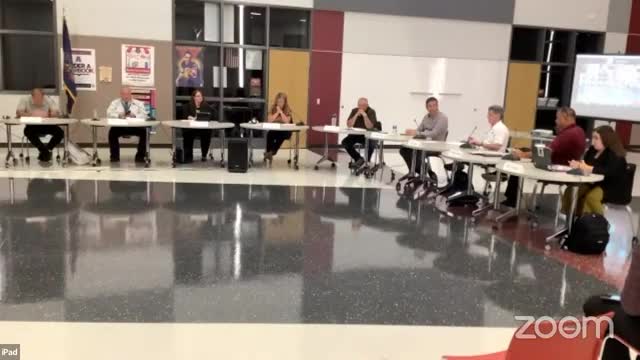
In a recent government meeting, education officials outlined their strategies for improving student performance in literacy and science across K-12 grades. The discussions focused on the collection of baseline data to assess student progress and the implementation of new educational standards.
Officials reported that they are currently gathering beginning-of-year baseline data to evaluate student performance in reading and literacy. The goal is to achieve a benchmark assessment increase of 70% or higher for students in grades K-5, with specific measures for different grade levels. For instance, kindergarten students will be assessed on their mastery of the alphabet, while students in grades 3-5 will take a newly introduced English Language Arts (ELA) unit assessment.
The meeting highlighted the challenges posed by a transient student population in Altoona, which complicates data collection. However, officials emphasized their commitment to tracking progress through structured literacy training for teachers and ongoing support from instructional coaches. Monthly events aimed at engaging parents in their children's literacy development were also discussed, aiming to foster a collaborative approach to education.
In addition to literacy initiatives, the meeting addressed the recent transition in the science curriculum, particularly the implementation of new science standards and the adjustment of the biology course to 9th grade. Officials expressed a goal to improve science scores by 5% over the next year, following a report that only 41% of students passed the Keystone science exam last year. Strategies to achieve this include diagnostic testing and collaboration with instructional coaches to enhance teaching practices.
Concerns were raised regarding the delayed availability of state assessment results, which hinder timely evaluations of both student performance and teacher effectiveness. Officials noted that while Keystone exam results are received earlier, the PSSA data is often not available until December, complicating the assessment process.
Overall, the meeting underscored a proactive approach to enhancing educational outcomes through data-driven strategies, professional development, and community engagement, with a clear focus on improving literacy and science education in the district.
Officials reported that they are currently gathering beginning-of-year baseline data to evaluate student performance in reading and literacy. The goal is to achieve a benchmark assessment increase of 70% or higher for students in grades K-5, with specific measures for different grade levels. For instance, kindergarten students will be assessed on their mastery of the alphabet, while students in grades 3-5 will take a newly introduced English Language Arts (ELA) unit assessment.
The meeting highlighted the challenges posed by a transient student population in Altoona, which complicates data collection. However, officials emphasized their commitment to tracking progress through structured literacy training for teachers and ongoing support from instructional coaches. Monthly events aimed at engaging parents in their children's literacy development were also discussed, aiming to foster a collaborative approach to education.
In addition to literacy initiatives, the meeting addressed the recent transition in the science curriculum, particularly the implementation of new science standards and the adjustment of the biology course to 9th grade. Officials expressed a goal to improve science scores by 5% over the next year, following a report that only 41% of students passed the Keystone science exam last year. Strategies to achieve this include diagnostic testing and collaboration with instructional coaches to enhance teaching practices.
Concerns were raised regarding the delayed availability of state assessment results, which hinder timely evaluations of both student performance and teacher effectiveness. Officials noted that while Keystone exam results are received earlier, the PSSA data is often not available until December, complicating the assessment process.
Overall, the meeting underscored a proactive approach to enhancing educational outcomes through data-driven strategies, professional development, and community engagement, with a clear focus on improving literacy and science education in the district.
View the Full Meeting & All Its Details
This article offers just a summary. Unlock complete video, transcripts, and insights as a Founder Member.
✓
Watch full, unedited meeting videos
✓
Search every word spoken in unlimited transcripts
✓
AI summaries & real-time alerts (all government levels)
✓
Permanent access to expanding government content
30-day money-back guarantee
