CTA Secures $1.16 Billion Boost for Major Infrastructure Project
August 15, 2024 | Chicago Transit Authority Board, C, Boards and Commissions, Executive, Illinois
This article was created by AI summarizing key points discussed. AI makes mistakes, so for full details and context, please refer to the video of the full meeting. Please report any errors so we can fix them. Report an error »
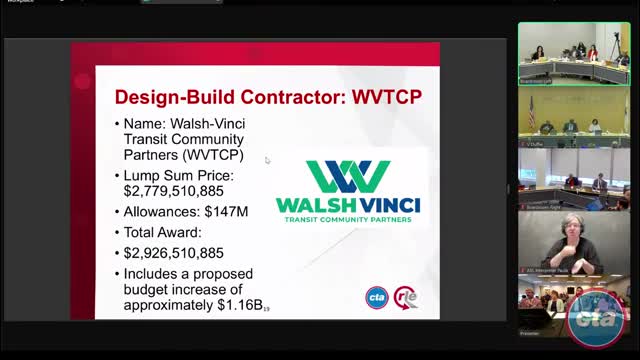
The meeting highlighted the necessity for the CTA to demonstrate that all funding for the project is committed and approved by the board to secure a full funding grant agreement later this year. The amendment is also set to reduce financing charges, benefiting from accelerated federal funding that will lower interest costs during construction.
The funding plan includes a diverse array of financial sources, with $132 million allocated from various federal programs, including the Carbon Reduction Program and HUD community project funding. Additionally, the local share match comprises state funding and previously issued CTA bonds.
A key focus of the meeting was the commitment to diversity and inclusion within the project. The design-build contract has set ambitious goals of 25% for design and 22% for construction participation from Disadvantaged Business Enterprises (DBEs). The Walsh Vinci joint venture, selected for the project, has pledged to support DBE firms through mentorship and networking opportunities, aiming to enhance their competitiveness for future contracts.
Moreover, the project will implement workforce goals, requiring that 10% of design hours be performed by residents from economically disadvantaged areas. This initiative is part of a broader strategy to create pathways for low-income workers and ensure that local communities benefit from the project.
As the CTA prepares to break ground in late 2025, officials emphasized the importance of outreach efforts to engage potential DBE firms and local residents, ensuring that the project not only enhances transit infrastructure but also fosters economic growth and opportunity within the community.
View the Full Meeting & All Its Details
This article offers just a summary. Unlock complete video, transcripts, and insights as a Founder Member.
30-day money-back guarantee
Sponsors
Proudly supported by sponsors who keep Illinois articles free in 2026

