CEO requests tracking of costs for Denver's Ambient Loop project
October 29, 2024 | Public Utilities Commission, Governor's Boards and Commissions, Organizations, Executive, Colorado
This article was created by AI summarizing key points discussed. AI makes mistakes, so for full details and context, please refer to the video of the full meeting. Please report any errors so we can fix them. Report an error »
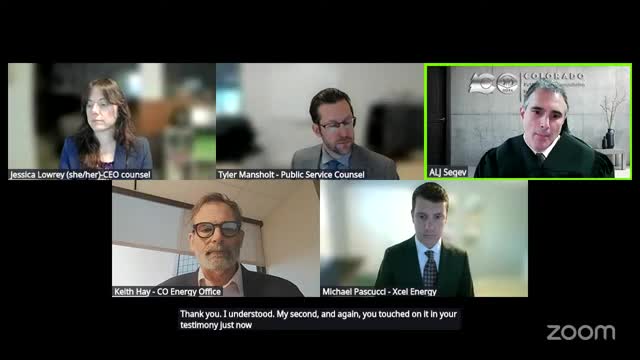
At the heart of the conversation was the CEO's request for the company to meticulously track expenses related to the Ambient Loop. This request raised questions about the feasibility of tracking incremental costs, especially concerning the hiring of contractors and the allocation of employee time. Mike Pascucci, the director of regulatory policy, expressed uncertainty about how to account for these costs, emphasizing that the agreement with the city of Denver did not imply that existing employee costs would be billed separately to the city. Instead, it was understood that any additional expenses incurred for design and engineering would be funded by Denver through the Clean Air, Clean Jobs program, not by the company's gas customers.
The dialogue also touched on the potential for expanding thermal energy network projects. Pascucci highlighted ongoing collaborations with the Colorado Energy Office, which could lead to the development of up to five additional community thermal energy network pilot projects. This initiative aligns with the state's clean heat plan, offering a pathway for innovative energy solutions while maintaining flexibility for future proposals.
As the meeting concluded, the focus remained on the Denver Ambient Loop and its implications for the city's energy landscape. The discussions underscored a commitment to sustainable energy practices while navigating the intricate web of regulatory and financial considerations. With the groundwork laid for future projects, stakeholders left the meeting with a sense of purpose, eager to explore the possibilities that lie ahead in Colorado's energy transition.
View the Full Meeting & All Its Details
This article offers just a summary. Unlock complete video, transcripts, and insights as a Founder Member.
30-day money-back guarantee
Sponsors
Proudly supported by sponsors who keep Colorado articles free in 2026

