Get Full Government Meeting Transcripts, Videos, & Alerts Forever!
Get email alerts on the School Finance topic
No spam. Unsubscribe anytime.
Oregon City Schools approves 5-year forecast, creates capital projects fund amid state budget uncertainty
Summary
Board adopted its May 2025 five-year financial forecast and approved a resolution to establish a capital projects fund after treasurer staff warned that pending state proposals to cap general-fund cash balances could force districts to return money to taxpayers.
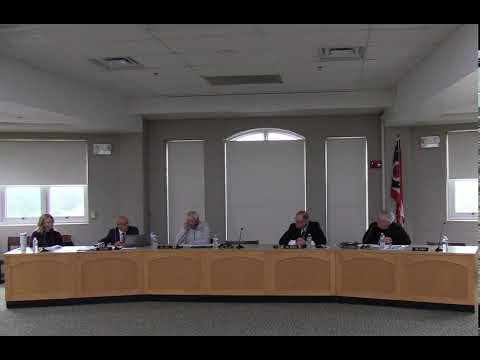
The Oregon City Schools Board of Education on May 20 adopted its second five-year forecast for the 2024–25 fiscal year and approved a resolution to establish a capital projects fund, actions the board took after treasurer staff described state-level budget proposals that could reduce how much cash districts may retain.
Treasurer staff presented the forecast and recommended steps to smooth future budget volatility, including a standing transfer into a severance fund and the creation of a capital projects fund to hold money for facility work without counting toward general-fund ending-balance limits. Acting Treasurer Jennifer Sumoff told the board, “This is the second forecast for this fiscal year.”
Why it matters: presenters said a wave of proposals in Columbus — including a plan discussed in the House that would limit general-fund ending balances to a 30 percent cap (the senate reportedly considering higher numbers) — could force districts to return reserves to taxpayers. Board advisers said moving discretionary cash to a capital projects fund would not count toward the proposed general-fund cap, giving the district a buffer if the legislature adopts the policy.
In the presentation, consultant Kaitlyn Keating and colleague Jeff Dorwisch described revenue drivers and risks: the district saw an estimated 8 percent increase this year in real-estate revenue tied to reappraisal in nearby counties, but the district is not at the so-called 20-mill floor and therefore will not capture the full benefit enjoyed by many other Ohio districts. Keating and Dorwisch said the forecast assumes modest growth in later years (about 1.5 percent annually) because of uncertainty in Columbus.
The presentation also identified a scheduled phaseout the district still receives for tangible personal property reimbursements (about $300,000 per year) and noted the district’s current severance balance is small (approximately $11,000). Treasurer staff recommended a recurring transfer — they suggested $500,000 as an example — into a severance reserve to smooth the financial impact of retirements and large one-time severance payments.
Board action and votes: the board voted to approve the five-year forecast at the May 20 meeting (roll call: Mister Shea — yes; Mister Eversman — yes; Mister Sabet — yes). The board later approved the resolution establishing a capital projects fund by roll call (Shea — yes; Eversman — yes; Sabet — yes). The board also approved a one-year contract for compilation of financial statements for fiscal year 2025, listed at $9,900 to "Julian and Groove" as shown in the agenda materials.
Discussion details: presenters emphasized the conservative assumptions in the forecast given pending state budget action. They described the practical effect of the proposed cash-balance rule: if enacted, districts with general-fund ending balances above the cap could be required to return funds to taxpayers. Keating told the board the district could reclassify funds into the capital projects fund, which would not be counted in the general-fund balance under the proposal. Board members asked whether the 30 percent number might change; staff said the senate has discussed higher percentages and that final conference-committee action usually arrives around June 29–30.
Next steps and context: treasurer staff said they will update forecasting materials as state proposals firm up and suggested the board consider routine transfers into restricted funds to reduce year-to-year volatility. The board scheduled a special meeting later in the week and will receive further updates from the superintendent and treasurer staff as the state budget process unfolds.