
Forest Park council approves standards to reduce homeowner reviews by Urban Design Review Board
Get AI-powered insights, summaries, and transcripts
Sign Up Free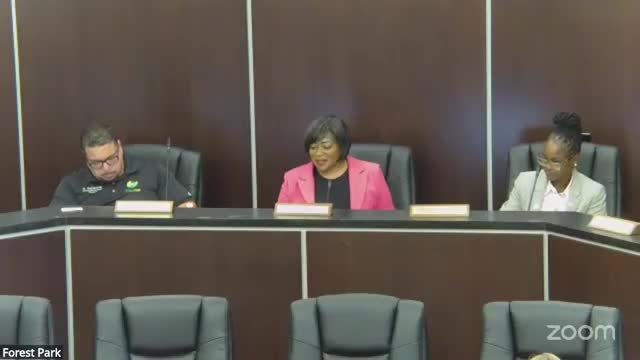
Summary
Council voted to have staff write development standards allowing minor residential exterior improvements to be reviewed administratively rather than requiring all homeowners to appear before the Urban Design Review Board.
Forest Park city council voted Tuesday to direct staff to draft development‑standard language that will allow minor residential exterior improvements to be reviewed by planning staff instead of requiring every homeowner to appear before the Urban Design Review Board. The motion, made by Councilwoman James and seconded by Councilwoman Akins Wells, passed by unanimous roll call.
The change responds to resident complaints about application fees and confusion over when projects must go before the board. Director Dozier, speaking for Planning and Community Development, told the council staff presented three options: separate commercial and residential fees, develop standards to allow staff review for minor residential work (the option the council approved), or waive residential fees entirely. Dozier said staff will prepare ordinance text amending the UDRB rules and produce a homeowner permitting guide and trainings to explain when permits and board review are required.
City Attorney Matt Giacardi cautioned the council that waiving fees for all residents could run afoul of state law on gifts or gratuities, saying the city “can’t just waive all residential fees together because that would be a gratuity which we cannot give.” Councilwoman James said residents want clarity and transparency and asked staff to include side‑by‑side comparisons with neighboring jurisdictions and the date of their last fee updates. Dozier noted that planning and community development fees had been updated earlier in 2025 and that prior to the recent schedule the city’s petition fee had been $250.
The council’s action instructs staff to draft specific development standards that distinguish which residential changes may be approved administratively by staff and which must be reviewed by the UDRB. Staff said the homeowners’ guide will explain the new permitting system, list when board review is required, and outline training and outreach plans. No fee schedule change was adopted at the meeting; the council approved the standards‑development approach and directed staff to return with ordinance language and communication materials.
Next steps: planning staff will write the amendment to the UDRB ordinance, create the homeowner permit guide, and return to council with proposed text and any recommended fee adjustments for later action.