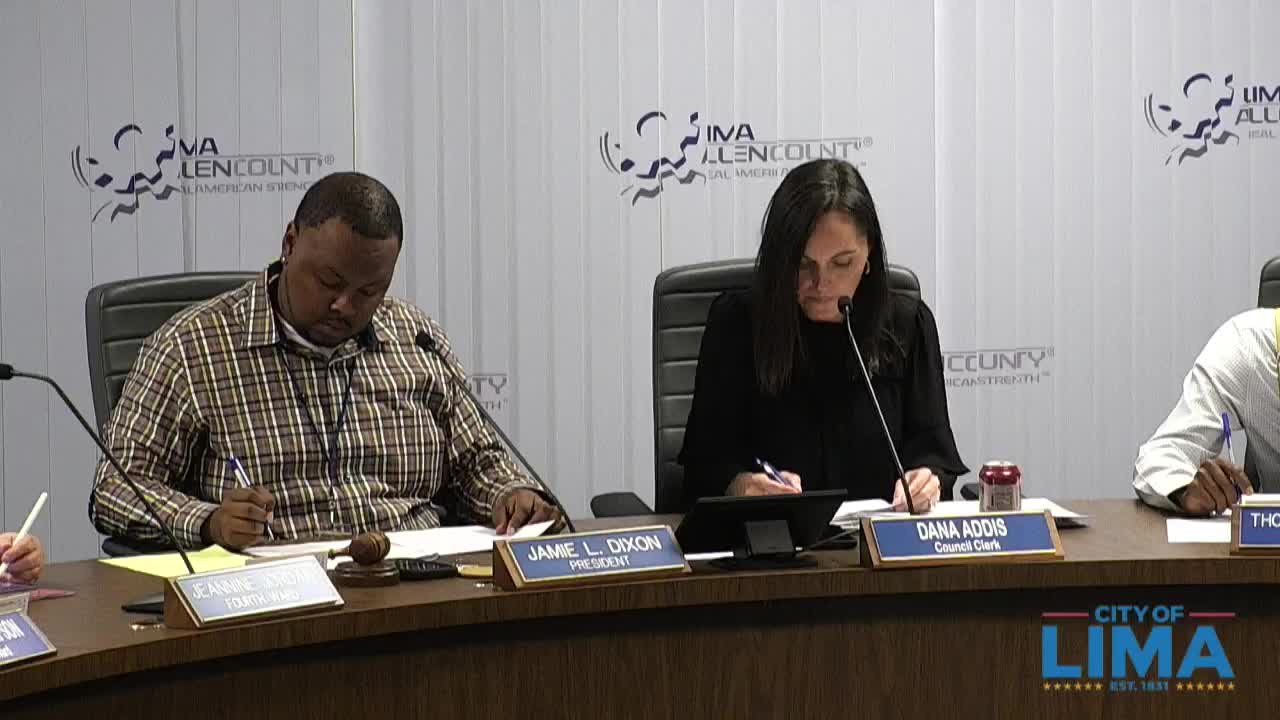
Council approves first reading for lead service‑line replacement; residents press for cleaner work practices
Loading...
Summary
Lima City Council passed the first reading of an ordinance to advertise bids for phase 3A of lead service‑line replacements. Councilors and residents raised concerns about dusty streets, porta‑potty placement near churches and homes, contractor staging, and paving timelines tied to the asphalt plant season.
Lima City Council on Feb. 5 passed ordinance 203‑25 on its first reading, authorizing the mayor to advertise for bids and enter a contract for phase 3A of the city’s lead service‑line replacement program.
Councilors said the project is necessary for compliance with Environmental Protection Agency requirements and public‑health goals, but several members and residents pressed utilities staff on construction impacts in neighborhoods.
Mr. Capralla, representing the Utilities Department, told councilors the program consists of multiple crews working across wards and that trenching, excavation and subsequent patching are part of the work. He said the city controls contractors through contract oversight and will require corrections when residents raise specific concerns.
A councilor raised multiple complaints from residents whose streets currently look torn up weeks after crews worked there. Specific concerns included porta‑potty placement in front of a church on Franklin Avenue, persistent dust when concrete is cut, crews leaving stone rather than restoring asphalt, equipment parked on streets over weekends, and street lights out near work sites.
Capralla said the city will address contractor placement and cleanliness, noting that contractors are under contract to correct issues. Another councilor and staff noted that saw cutting should be wet when performed, because “it is EPA guideline that you have to water while you saw cut,” a practice that would reduce dust. Staff also warned that the seasonal asphalt plant schedule may delay final paving until spring, because plants can close in November.
Councilors asked for timelines for how long work takes per street and for assurance that contractors will use city‑owned staging areas where available to reduce street congestion. Capralla said he will ask the overseeing staff to address the listed concerns and to report back to council.
Ordinance 203‑25 passed its first reading by a 7‑0 voice vote. Councilors said they will press the utilities department to enforce contractor obligations on dust mitigation, respectful placement of equipment and timely restoration of asphalt where feasible.