
Des Moines County staff present broad rewrite of wind, solar and battery ordinance; board discusses decommissioning, ice throw and enforcement
Get AI-powered insights, summaries, and transcripts
Subscribe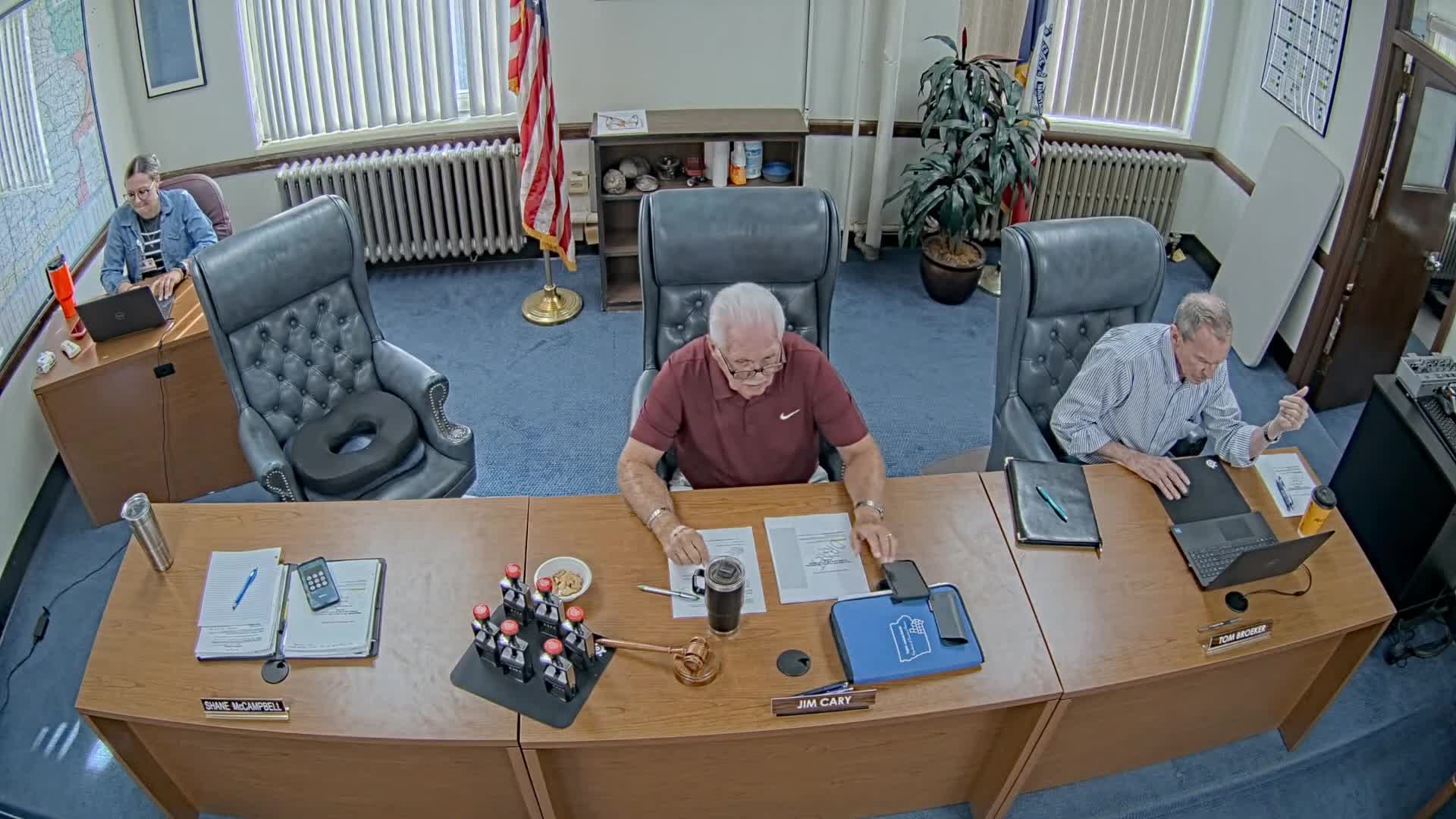
Summary
Des Moines County staff presented a consolidated rewrite of the county's wind, solar and battery ordinance at the Sept. 30 Board of Supervisors work session, walking supervisors through new or revised definitions, meteorological tower (MET tower) permitting, decommissioning and enforcement language.
Des Moines County staff presented a consolidated rewrite of the county's wind, solar and battery ordinance at the Sept. 30 Board of Supervisors work session, walking supervisors through new or revised definitions, meteorological tower (MET tower) permitting, decommissioning and enforcement language.
The presentation covered four articles of the proposed ordinance and stressed that many edits were clarifications rather than wholesale policy changes. Staff said the rewrite aims to distinguish commercial, utility-scale systems from smaller "personal" systems; to add standalone battery energy storage systems to the rules; and to clarify how enforcement and decommissioning would work if portions of a facility required removal.
Why it matters: the draft would shape how large renewable energy and storage projects are permitted, monitored and ultimately removed in unincorporated Des Moines County.
Key points from the review included: - Definitions and scope: The draft explicitly defines commercial versus personal solar, wind and battery systems. For solar, staff used a 25-megawatt threshold (a value tied to the Iowa Utilities Board's jurisdiction used in some counties) to identify commercial systems; wind systems were flagged as commercial at 1 megawatt or more and the presence of turbines "several hundred feet" tall. Staff said the distinctions are intended to capture utility-scale projects while excluding rooftop or small private systems. Supervisors and participants discussed whether the numeric cutoffs should be changed. - Standalone battery storage: The draft expands prior language (which treated battery modules only as components of wind/solar farms) to include standalone commercial battery energy systems, defined to cover inverters, transformers, cooling systems and related infrastructure. - MET towers: Staff proposed a simplified MET-tower permit process for temporary towers used to collect wind data; the draft includes a requirement that MET towers installed before the ordinance be removed once a project proceeds. The presenter noted two MET towers in the northwest county that had been installed under earlier processes and would fall under the new removal requirements. - Decommissioning and partial removal: The draft clarifies that a single problematic "implement" (for example, one turbine or a single battery array) could be decommissioned without taking down an entire project. Staff said that approach makes enforcement more practical and proportional to the problem. - Habitual violations and penalties: The ordinance references Iowa Code chapter 331 for enforcement penalties and proposes language for continued violations (staff offered an example threshold of three violations in a calendar year that could lead to revocation and decommissioning). Supervisors asked staff to supply model language (staff referenced Polk County and said they would provide the source text). - Safety issues: The draft adds or refines definitions for "ice throw" (shedding of ice from turbine blades) and "shadow flicker" (moving shadows cast by rotating blades). Board members debated the exact wording; several suggested simplified definitions to avoid requiring technical experts to prove cause in court. Staff proposed requiring developer responsibility when material falls from equipment and discussed optional technical mitigations (for example, sensors or blade coatings). - Aircraft-detection lighting systems: The draft includes a definition and a provision that any requirement for aircraft-activated lighting would be contingent on Federal Aviation Administration (FAA) approval; staff emphasized that the ordinance can require the developer to request an FAA-approved system but cannot override federal approval requirements. - Enforcement and ongoing oversight: Supervisors and staff discussed who should administer complaints and compliance during a project's operational lifespan. Staff proposed a county administrator role to coordinate; board members raised the possibility of delegating ongoing compliance inspections and after-the-fact enforcement to Des Moines County Public Health or to a subcontracted inspector, citing Louisa County and other regional examples where local health departments or regional planning entities handled operational compliance.
Staff told the board that the ordinance references airport and floodplain rules as well as Chapter 331 of the Iowa Code for penalty authority. The presenter said several sections will be revised following the meeting's feedback and that staff would return with updated wording, citations and any requested language about how the county will treat "occupied dwellings" under construction.
Next steps: Staff will supply model language for habitual-violation thresholds, clarify the numeric thresholds used to separate commercial and personal systems, refine definitions (especially for ice throw and shadow flicker), and coordinate with the county public health office on how ongoing enforcement and 24-hour emergency contact processes would operate. No final vote on the ordinance occurred at the Sept. 30 meeting.
Ending: The board scheduled further work sessions to refine the ordinance language and asked staff to bring model code citations and clearer definitions back to the board for a future meeting.