Get Full Government Meeting Transcripts, Videos, & Alerts Forever!
Get email alerts on the Municipal Budget topic
No spam. Unsubscribe anytime.
Evansville Council approves midyear transfers, appropriations in amended budget ordinance
Summary
The Evansville Common Council on Aug. 26 adopted Ordinance F-20-24-10 (amended), approving a series of internal transfers and several additional appropriations across city funds to cover health insurance, vehicle purchases, storm claims and other items.
The Evansville Common Council adopted Ordinance F-20-24-10 amended on Aug. 26, approving multiple internal transfers between department budgets and several additional appropriations covering health insurance, vehicle and equipment purchases, storm-related insurance claims and other items.
Council members voted 9-0 to adopt the amended ordinance after the controller’s office walked through line-item moves and additions. The transfers reallocate existing appropriations between departments and funds rather than increasing the overall citywide budget, according to Robert Johnson of the controller’s office.
The amendments include transfers to cover city employee health-insurance shortfalls and payout adjustments stemming from vacancies and personnel changes, and to provide operating funds for public works, cemetery operations, traffic engineering, parks and other departments. Specific moves cited in the meeting record include: $50,000 moved from full-time salaries to repair parts for METS buses; $12,000 moved from consultants to fuel in the Motor Vehicle Highway Fund for traffic engineering; $6,500 shifted from human relations full-time salaries to the mayor’s office (allocated as $1,710 for salaries and $4,790 for health insurance); $18,000 moved from Locust Hill Cemeteries to Oak Hill Cemeteries; and several transfers to cover health insurance in multiple funds.
Johnson said many of the transfers reflect vacancies or payroll changes and are not increases to the overall budget. On health insurance specifically, he said claims from prior years arrived in the current fiscal year and the city increased the per-employee allocation (he cited an amount per payroll) to better “true up” reserves for claims. Council members asked whether the city expects to need additional transfers later in the year; Johnson said the goal was to avoid another transfer by setting aside sufficient funds for the remainder of the year and that the city had been operating “in the black” in recent months.
The ordinance also includes additional appropriations and adjustments beyond health insurance: $19,340 for police merit recruitment; $9,000 for animal control (split in the record as $7,000 for food and $2,000 for other supplies); appropriation from casino fund interest to purchase a shared pool vehicle; carryover and interest payments related to 2024 bond activity and multiple debt-service appropriations; and an appropriation to cover liability insurance claims tied to April and July storms (the ordinance requested roughly $900,000 from cash to cover storm damage claims, with Johnson warning more requests may follow as claims are processed).
Council members asked clarifying questions about several items: the split of vehicle costs shared with the county (weights and measures vehicle), the duration of bond terms (Johnson said he would follow up with details), and whether employees funded in ARPA accounts would be reassigned to permanent positions after grant funding ends (Johnson said staff had been promised efforts to find a position and noted an open position in finance). Multiple council members flagged the need to monitor shared vehicle usage and report savings from pooling vehicles.
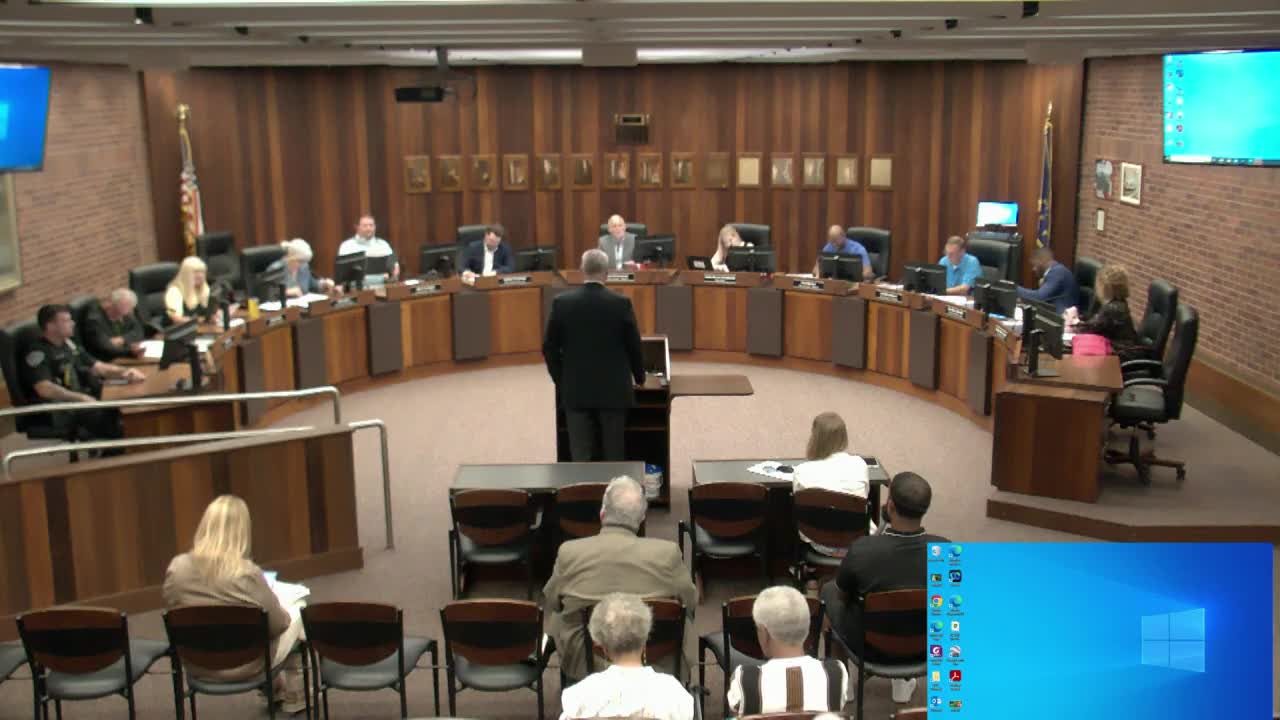
After public questions and controller responses, Councilwoman Kayla Lindsey moved to adopt the ordinance and Councilwoman Mary Allen seconded; the ordinance passed on a 9-0 roll call.
The ordinance text and the controller’s supporting schedules will be reflected in the final budget books and during upcoming budget hearings.
Looking ahead, several council members asked staff for follow-up information by email or at the next finance review — including bond term details, insurance reimbursement status from carriers, and regular reports on the shared vehicle program’s savings.