Get Full Government Meeting Transcripts, Videos, & Alerts Forever!
Get email alerts on the Downtown Revitalization topic
No spam. Unsubscribe anytime.
Candidates call for cohesive plan to make Simsbury downtown more walkable and active
Summary
At a Granby Simsbury Chamber forum, three first-selectman candidates urged a coordinated, 10–15-year strategic plan to improve downtown walkability, revitalize underused lots and clarify the future of Eno Hall, with differing views on next steps and costs.
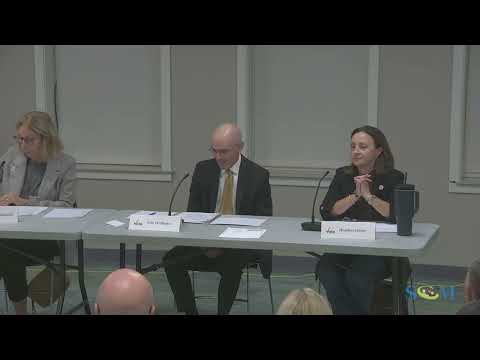
At a candidates' forum hosted by the Granby Simsbury Chamber of Commerce on Oct. 18, Simsbury’s three first‑selectman candidates said a single, long‑term plan is needed to make downtown Simsbury safer, more walkable and a stronger economic engine.
The call for a unified strategy came during an exchange about Station Street, Eno Hall and several downtown projects. Heather Goetz, Republican candidate and member of the Board of Selectmen, said scattered projects risk becoming “pile[s] of bricks” without an overarching plan and raised Eno Hall’s condition and possible uses: “Eno Hall … currently houses our senior center in the basement and our social services in the building,” she said, adding that recent renovation “quotes … are close to $6,000,000.”
Why it matters: Downtown design, traffic flow and defined uses for town assets affect where residents shop and whether small businesses get enough foot traffic. A coordinated strategy would guide capital spending and sequencing for projects such as Station Street’s conversion back to two‑way traffic and the Eno Hall parking‑lot renovation, both of which candidates said should align with a larger downtown vision.
Details and debate: Eric Wellman, an independent and former first selectman, said investments that get people out of cars are critical: “When people get out of their cars and get on the sidewalk, that’s only good for Main Street businesses.” He pointed to past sidewalk and ADA improvements and a bike‑pedestrian master plan as examples of prioritized projects that delivered measurable results.
Wendy Max Dudas, Simsbury’s first selectman and the Democratic candidate, described recent downtown investments she said help attract visitors — the Flower Bridge reopening, improved wayfinding signs, expanded programming at the Simsbury Performing Arts Center, and Rotary Park upgrades — and argued those efforts must be coordinated with planning, economic development and Main Street partners.
Candidates differed on immediate actions. Goetz said a strategic plan should prioritize pedestrianized areas and mixed‑use infill to increase downtown dwell time. Dudas emphasized using existing plans (the Plan of Conservation and Development, parks and rec master plan, and others) and coordinating boards and commissions to implement those documents rather than starting from scratch. Wellman recommended continued execution of the bike‑pedestrian plan and targeted public‑safety staffing to support a livelier downtown.
Community context and constraints: Candidates noted current projects already in motion — Station Street’s redesign and Eno Hall parking work — and voiced concern that completing those isolated projects without a long‑term framework could lead to inefficient spending. All three agreed that business retention and street‑level improvements are part of the solution.
What’s next: Candidates said they would seek grant funding and alignment among town departments, the Economic Development Commission, Simsbury Main Street Partnership and the Chamber. Exact funding sources, timelines and vote outcomes for the projects discussed were not provided at the forum.
Ending: The candidates framed a shared goal of a more walkable, active downtown but differed on whether to pursue immediate renovations that are already funded or to pause and sequence them within a 10–15‑year strategic plan. Voters will next see these issues placed before them as the town considers capital priorities and planning commission actions going forward.