Get Full Government Meeting Transcripts, Videos, & Alerts Forever!
Get email alerts on the Pavement Management topic
No spam. Unsubscribe anytime.
Pavement-management update: Cathedral City reports steady investment, PCI dip tied to recent projects
Summary
City engineer reported a slight drop in the citywide pavement condition index (PCI) and summarized roughly $12.9 million invested since 2023; Measure W additions should sustain near-term funding levels while large reconstruction costs remain significant.
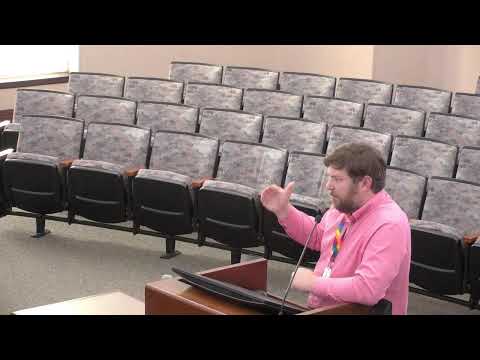
City Engineer Armando Baldazone updated the City Council Monday on the five-year capital improvement program and the pavement-management program, reporting progress on recent projects and explaining why the citywide pavement condition index has fallen slightly since the program began.
The report matters because the city’s pavement condition influences maintenance costs, traffic safety and capital budgeting across Cathedral City’s 157 miles of roadway.
Baldazone said the city implemented a pavement-management program in 2023 that divided the roadway network into approximately 1,400 segments and produced a baseline PCI of 64. He told the council the updated PCI is 61 and explained three reasons for the decline: reconstructed streets typically show rapid early wear during the first 12 months after paving, smaller-area projects have less influence on a surface-weighted PCI, and much recent spending addressed high-cost, high-surface-area reconstruction projects.
City staff reported $12.9 million spent since program implementation: roughly $3.1 million on maintenance (slurry seal, crack sealing) and $9.8 million on rehabilitation and reconstruction. Baldazone said the city’s average ongoing funding for streets over the last period is about $3.7 million annually, excluding one-time or project-specific funding sources that added roughly $5.4 million for major work.
Baldazone reviewed three funding scenarios the pavement-management consultant produced in 2023: holding current PCI levels would require a sustained investment between roughly $2 million and $12 million per year depending on activity; higher sustained investment (roughly $12–$15 million) would significantly improve the network. The presentation noted the city has used Measure A, assessment districts and one-time funds for recent projects; Measure W revenue will help replace diminishing funding sources and stabilize near-term investment at about $3.4–$3.8 million per year in the current five-year plan.
Council members asked technical questions about update frequency and the effect of different maintenance treatments. Baldazone said project managers update the pavement database as soon as a project reaches notice of completion and that the recommended cycle for a full citywide re-evaluation is generally every five years. He said routine treatments such as slurry seals typically raise a segment’s PCI by about seven to eight points rather than restoring it to near-new condition; only full reconstruction will produce a segment close to 100 PCI.
Council members raised the high dollar costs of major reconstruction—Baldazone noted the Department’s reconstruction work following Tropical Storm Hillary and cited an approximate figure of $4.87 million for a recent segment—and asked staff to continue prioritizing projects while pursuing available federal and state funding.
No formal action was taken. Staff said planned projects for FY 2025–26 and 2026–27 are on the CIP list and that some projects remain unfunded in the plan; Measure W revenues and other grants or impact fees may be applied as the council directs future budget decisions.
The city engineer concluded by saying the city is updating the pavement-management database with the most recent project results and will continue to use the tool to prioritize cost-effective maintenance.