
Tiburon design board approves revised Station 10 design, requires native landscaping
Get AI-powered insights, summaries, and transcripts
Subscribe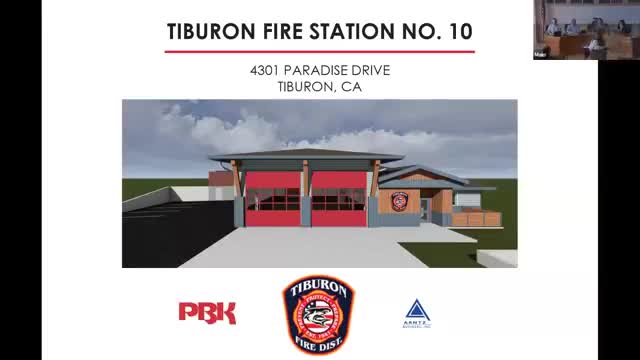
Summary
The Tiburon Design Review Board approved revisions to the new Fire Station 10 at 4301 Paradise Drive, including an expanded mezzanine and eight skylights, and added a condition that landscaping must use native species; the project was found categorically exempt from CEQA.
The Tiburon Design Review Board on Oct. 2 approved revisions to the new Fire Station 10 at 4301 Paradise Drive, allowing an expanded mezzanine, eight skylights and material substitutions while adding a condition that landscaping be native species. The decision follows a presentation by the project architect and several board comments about the building’s front elevation and materials. The board adopted the draft resolution and found the project categorically exempt from the California Environmental Quality Act. Architect Kelly, representing PPK Architects and the fire district, described the main design changes: a gable roof at the main entry, a 258-square-foot expansion of the mezzanine with an exterior stair, a change from stone veneer to fiber-cement board-and-batten, a switch from metal roofing to composite shingle, and eight skylights placed to bring light to the apparatus bay, mezzanine, dorm corridor and kitchen. Kelly said the new total building area is 5,210 square feet and that the demolished earlier station has been cleared and the site is ready for construction. Battalion Chief Daniel Harkington of Tiburon Fire told the board the project team included a demonstration of a wood-look siding that was recently approved by Cal Fire for WUI areas so it could serve as an example for nearby homeowners. “The wood siding actually is a new product that was just, went through a process with Cal Fire, and now they’ve approved it to be installed in all the WUI areas,” Harkington said. Board members generally accepted the functional changes — including the exterior stair, skylights and the mezzanine expansion — but several members and nearby residents raised aesthetic concerns about the front elevation, describing it as visually “busy” and urging a simpler material treatment that would emphasize the wood entry element. The applicant said the material substitutions were made in a value-engineering effort to reduce cost while keeping durable, low-maintenance finishes. The project also includes a rear training tower (about 17 feet tall) built with a concrete masonry unit base and a recycled conex box on the top level, space for a generator and trash, some new parking stalls and an area for solar panels. The board asked that final landscaping species be listed as native and fire‑resistant; staff and the architect confirmed that a condition requiring native species was added to the resolution and the board adopted the resolution with that condition. The board motion adopted the draft resolution with the added condition that the plant palette be native species; the action included the CEQA finding that the project is categorically exempt. The motion passed with the majority in favor and one recorded nay. The board closed the hearing and wished the project team luck proceeding to construction. Why it matters: the new station replaces a demolished facility and will provide modern apparatus storage, training facilities and living space for the district while influencing neighborhood architecture and landscaping decisions.