
Council extends septic design standards sunset by two years after lengthy riparian-buffer debate
Get AI-powered insights, summaries, and transcripts
Subscribe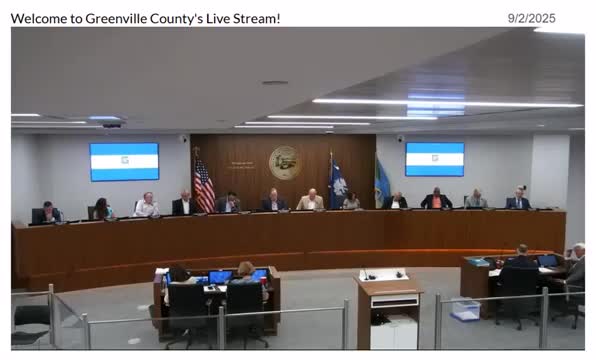
Summary
Greenville County Council voted to extend the sunset provision tied to ordinance 5,577 (septic tank design standards and riparian-buffer rules) for two years, after substantial debate about property rights, environmental protection and whether to remove the sunset entirely.
Greenville County Council voted to extend the sunset provision in ordinance number 5,577 — which updated septic-tank design standards for unzoned areas and established countywide riparian-buffer requirements — from the original January 2026 date to January 2, 2028. The measure passed on second reading after extended debate about environmental protection and the proper role of sunset clauses.
Councilor Bradley presented the ordinance change, saying it would change the sunset provision "to change the sunset provision to the ordinance from January '26 to 01/02/2028." Councilor Collins moved an amendment to remove the sunset provision entirely (to make the rules permanent), arguing the county should not repeatedly relitigate the rules; that amendment failed on roll call (the tally reported initially as 5 in favor, 7 opposed and later a 6-6 tie resolved against removal). After debate emphasizing water-quality concerns, riparian buffers and property-rights considerations, the council adopted the two-year extension on second reading with a roll call of 10 in favor and 2 opposed.
Arguments on both sides focused on trade-offs: supporters of extension and riparian buffers cited presentations showing buffers as a primary natural filter for pollutants and a tool to protect streams; opponents cautioned about applying uniform riparian-buffer rules to rural landowners who rely on septic systems and asked for more study or for split considerations between septic standards and buffers.
Scope clarification: council discussion noted the ordinance changes affect septic-tank developments and referenced applicability to larger developments (council comments indicated the rule targets developments of multiple dwellings rather than single-lot septic replacements). The ordinance being amended is ordinance number 5,577. Council asked staff and legal counsel about litigation risks and said no related litigation had been filed with the county attorney's office as of the meeting.
Next steps: the ordinance will return for third reading unless further amendments are proposed; several council members signaled continued interest in refining riparian-buffer language and in separating septic and buffer issues if needed.