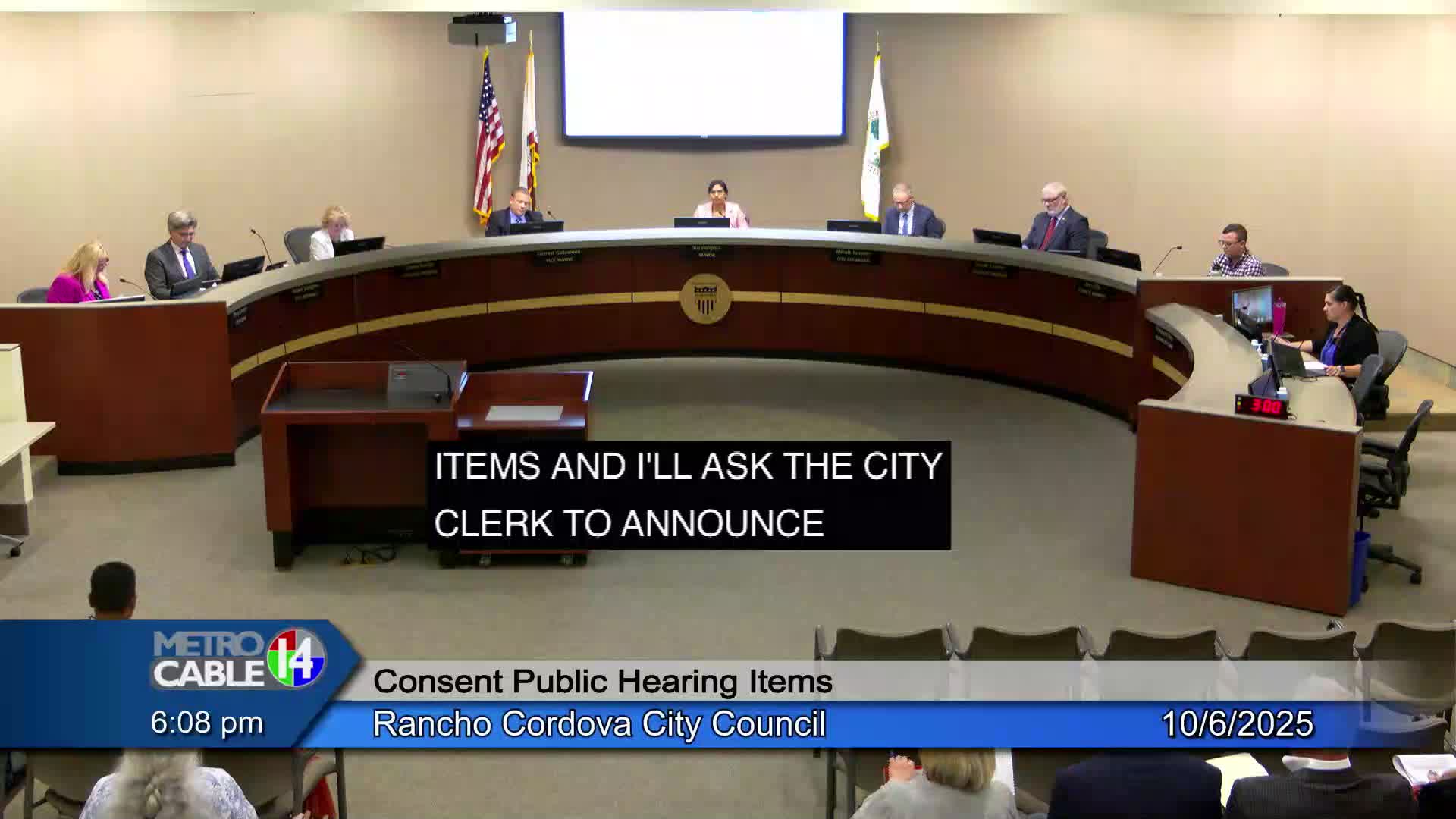
Council approves Fight Circle digital billboard and two‑year grant for Cordova Community Council despite objections over process
Loading...
Summary
Rancho Cordova’s council approved a zoning change, permit and operating agreement to allow a 1,003‑square‑foot digital billboard at Fight Circle and separately authorized a two‑year operations grant for the Cordova Community Council Foundation, actions opponents described as favoritism and supporters called a sustainable revenue source for local nonprofits.
The Rancho Cordova City Council voted 4–1 on Tuesday to allow a large digital billboard at Fight Circle and to authorize a two‑year operations grant to the Cordova Community Council Foundation, actions that city staff and proponents said will generate sustained revenue for local nonprofits and events and opponents called an appearance of favoritism.
Why it matters: The decisions affect the city’s sign code, land‑use approvals, and the funding model for a longtime local nonprofit that runs festivals, youth sports support and arts programming. Opponents warned the approvals create a problematic precedent and raised questions about conflicts of interest and code exemptions.
What the council approved: Planning staff presented a package that included a zoning text amendment to add a digital‑sign overlay near Fight Circle, a conditional use permit and minor design review for the proposed sign, certification of an Initial Study/Mitigated Negative Declaration under CEQA, and an operating agreement granting several deviations from standard sign rules. The applicant reduced the proposed display area from 1,200 to 1,003 square feet after public comments; the billboard would sit about 95 feet from the Caltrans right‑of‑way and replace an earlier planned western sign on a different property.
Staff said the municipal code allows limited deviations via an operating agreement when the city receives a community benefit. The operating agreement obligates the applicant to provide public‑service messaging and other community returns; staff recommended certification of the environmental document and approval of the agreements. The environmental review found potentially significant effects in several technical areas but concluded mitigation measures would reduce impacts below significance for air quality, biological and cultural resources, geology/soils and tribal cultural resources; a photometric analysis supported staff’s finding that the sign could meet a 0.3 foot‑candles above ambient illuminance standard.
Public comment split: More than two dozen speakers addressed the council. Many local nonprofit leaders, sports and arts organizers and residents urged approval, saying the Cordova Community Council (CCC) supports dozens of volunteer organizations, helps lower participation costs, and runs free community events including Fourth of July and concerts. Representatives included the Rancho Cordova Area Chamber of Commerce and the Rancho Cordova Sports Hall of Fame. Opponents included Clear Channel representative Amy Lerseth and some residents who argued the city should have run a request‑for‑proposals so the city — not a single nonprofit — would have received the contract or the revenue, and raised legal and fairness concerns. Clear Channel also disputed applicants’ ownership claims regarding a removed static sign.
Conflict and disclosure questions: The city attorney noted Councilmember David Sander serves as president of the Cordova Community Council and confirmed Sander receives no compensation from the nonprofit. The city attorney asked Sander whether he could participate impartially; Sander said he could. Several speakers urged recusal and said the council should avoid the appearance of preferential treatment. The city attorney advised that board membership without compensation is not, by itself, a disqualifying financial interest under state law but that the governing code allows council discretion to determine public benefit.
Applicants’ response: Cordova Community Council representatives and the sign operator said 100% of revenue generated by the sign would be reinvested in community programming and that the removed static sign was on the property and the lease was canceled before the static sign was removed. The applicant’s consultant said the project includes technical measures to reduce light spill and had reduced the sign area after planning commission and public comments.
Formal votes: Council approved the ordinance introduction (zoning text amendment), the resolution granting the conditional use permit and minor design review, certification of the mitigated negative declaration and approval of the operating agreement. The council then approved a separate resolution authorizing the city manager to execute a fourth restated two‑year grant agreement with the Cordova Community Council Foundation for FY 2025–27. Both actions passed on 4–1 votes; Council Member Little cast the lone no vote on each.
What was not approved: Council did not require the applicant to run an open RFP process for the sign concession, nor did it adopt a citywide new‑billboard overlay; staff said the city has the authority to expand overlays by ordinance. Opponents said the approvals effectively favored one nonprofit and created an uneven commercial playing field. Staff and applicants said operating agreements and community benefits are standard tools under the municipal code to shape site‑specific outcomes.
Next steps: Staff will return with edits to the previous mineshaft agreement to remove references to the canceled western sign, and the city will monitor environmental mitigation measures and operating‑agreement provisions for compliance. The operating agreement requires ongoing reporting and community advertising space commitments agreed by the applicant.
Local context: The Cordova Community Council is a 65‑year nonprofit that runs arts, sports and civic activities; the council also sought and received approval for a two‑year operations grant to sustain programming. Supporters said the billboard will fund community programs (applicants cited examples of recent grants and fundraising that benefited local sports and arts); opponents said the city should use a competitive procurement process if it wants to realize substantial revenue from publicly visible infrastructure.