City Schools of Decatur highlights budget transparency, modified zero-based process and ERP goal
Summary
CFO Dr. Lonita Broom described an award-winning, 300-plus-page budget book, ongoing use of a modified zero‑based budgeting process and a district goal to purchase an ERP to improve financial tracking and reduce unspent funds; community engagement and monthly reporting were outlined.
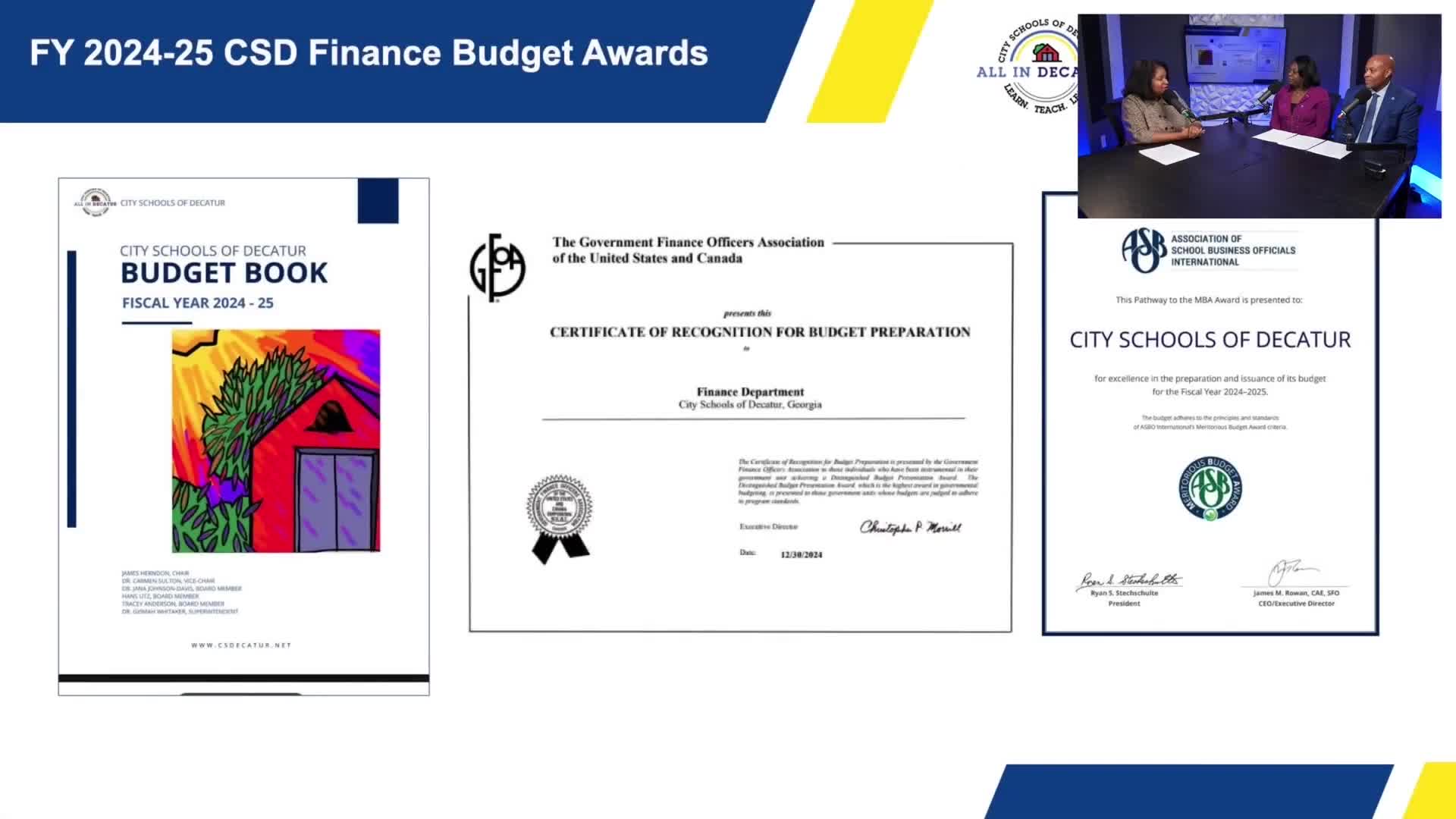
The City Schools of Decatur’s chief financial officer, Dr. Lonita Broom, said the district’s new budget book — a 300‑plus‑page document that won two awards — lays out detailed information on revenue sources, school and department spending and financial planning.
“The budget book allows us to be as transparent as possible,” Dr. Broom said, describing the book as containing “details on where the money is spent, how the money is spent, what department is spending, what schools is spending, their budget, their actual spend.”
The book and other changes are part of the district’s drive to improve organizational effectiveness under its All Indicator strategic plan, now in its third year. District leaders said the finance office moved last year to a modified zero‑based budgeting approach for operational spending, requiring departments to justify expenditures rather than automatically rolling prior budgets forward.
Dr. Broom said the modified zero‑based process allowed the district to provide schools a per‑pupil allotment after observing that some schools were leaving unspent funds at year‑end. “We were able to give them a per pupil expenditure since they were leaving so much money on the table,” she said. The district retains unspent funds in its fund balance; those reserves are carried into the next year and used if revenue falls short of expenditures.
Looking ahead, Dr. Broom said one of finance’s primary goals is to purchase an enterprise resource planning system (ERP) that will combine finance and human resources functions to improve tracking and forecasting. “One of the biggest goal is to purchase a finance and HR system. An ERP,” she said, adding that better tracking could help mitigate budget variances and, potentially, support future adjustments to the millage rate.
Dr. Broom outlined how the public can engage with the budget process: a budget feedback link on the district finance page where staff respond to submissions, community meetings with the board and monthly financial reports presented at board meetings. “We have the budget feedback link, and that’s on the district’s website, the finance page, where the community can voice their concerns, input, ask questions, and I respond to every question, every comment that’s submitted,” she said.
The finance office also noted that personnel costs make up the majority of district spending — “over 85% of our budget is personnel,” Dr. Broom said — and that the budget season is effectively year‑round, with planning for fiscal 2027 already under way. The CFO said the district’s largest portion of revenue is local property tax (millage) and emphasized that nutrition, transportation and operations budgets intersect closely with personnel and capital planning.
District officials said ongoing monthly reporting and the planned ERP purchase aim to increase efficiency and reduce the amount of “leftover” funds at year‑end.