Get Full Government Meeting Transcripts, Videos, & Alerts Forever!
Get email alerts on the Case Review Process topic
No spam. Unsubscribe anytime.
Civilian Review Board votes to streamline case reviews, narrows full-board readings to three exceptions
Summary
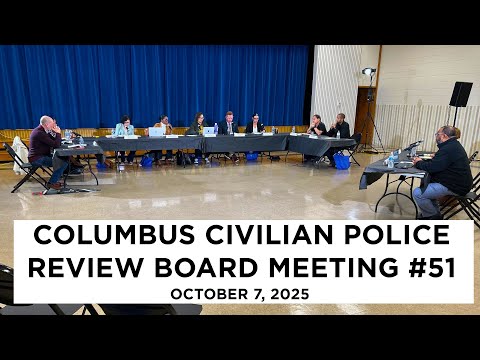
At its October meeting, the Civilian Review Board approved a new process to stop reading every case summary aloud at full board meetings; only cases meeting three specific criteria will be read in full and discussed by the full board.
The Civilian Review Board voted at its October meeting to adopt a streamlined case-review process that stops reading every case summary at full board meetings and instead calls up cases by number unless they meet specified exceptions.
The new rule will allow committees to review case materials in detail and present only cases that meet one of three conditions for full-board discussion: (1) there are questions or concerns about the outcome or how the investigation was conducted; (2) there are questions or concerns about the situation or pattern that is the focus of the investigation; or (3) the committee disagrees with the Office of the Inspector General's (IG) findings. When a committee concurs with the IG, the case will be announced by case number and placed to a vote rather than read aloud.
Board members debated the change for roughly an hour, raising procedural and transparency concerns. Supporters, led in discussion by Dr. Jones, said the practice would bring the board in line with peer civilian oversight bodies and free meeting time for policy work and pattern analysis. "Our board is the only board that is reading every single case summary verbatim during the meeting," Dr. Jones said, arguing that most comparable offices conduct reviews in committees and bring only contentious or complex cases to the full board.
Opponents and cautious members asked for safeguards: the right for any board member to flag a case for full discussion even if the committee concurs, reassurance that patterns would still be noticed if full readings stopped, and clarity on how the public would remain informed. Several members said the committees must continue to make full case materials available and that board members should be expected to read cases they later challenge.
The board moved the proposal as read into the record and voted. The motion, made by Dr. Jones (board member) and seconded by a board member identified as K., passed (voice vote; no formal roll-call tally given in the transcript). Chair Burns said the vote carries but warned that failure by members to adhere to rules could prompt the board to revisit the change.
The board also discussed related operational issues: whether subcommittee meetings (referred to in the transcript and by multiple speakers as "committees") should be scheduled earlier in the month when a fuller evidentiary review (including body-worn camera footage and invited testimony) is required, and whether the board's existing rules permit formal hearings, administer oaths, or issue subpoenas. City counsel Tobias told the board that, based on a review of the municipal code, the board does not appear to have subpoena power and that planning for hearings raises issues (oaths, testimony admission, cross-examination) that the board would have to address if it pursues formal hearings in the future.
The board directed staff to implement the new case-review process and to preserve pathways for any member or complainant to request a case be brought to full board review. Chair Burns said the board will monitor compliance with the new procedure and may vote to change it if the process proves problematic.
Ending: The change takes effect immediately for how committee recommendations are presented at full board meetings; board members and staff discussed schedule and logistics adjustments to ensure the committees can convene earlier in the month when more time is needed for evidence review.