Get Full Government Meeting Transcripts, Videos, & Alerts Forever!
Get email alerts on the Subdivision Access Waiver topic
No spam. Unsubscribe anytime.
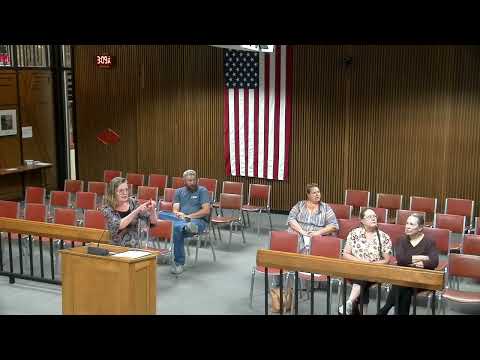
Planning Commission approves Sinclair minor subdivision after debate over private road and waivers
Summary
Fremont County Planning Commission recommended approval of MS25-001 (Sinclair) — a two-lot minor subdivision in Coaldale — with contingencies, conditions and multiple waivers after lengthy discussion about an unplatted private road/easement that provides access to existing homes.
The Fremont County Planning Commission on Oct. 8 recommended approval of MS25-001 (Sinclair), a minor subdivision to create two lots at 350 Sangre De Cristo Drive in Coaldale, with contingencies, conditions and waivers addressing drainage, access and plat notes.
Planning staff presented the request and recommended denial because the proposed lots lack frontage on a public street and the existing access is an easement rather than a dedicated roadway. The staff report noted nonconformance with Fremont County Subdivision Regulations I.B.4 (frontage on a public street), I.B.8 (access to a public dedicated street), I.B.9 (sidelines of lots at right angles to a street) and I.C (access standards), but outlined conditions and waivers the commission could attach if it chose to approve the application.
The matter turned on access: the two proposed lots would rely on a long-established private access that has existed since at least 1954 but was never dedicated or platted as a roadway. Attorney Gwendolyn Allen, representing the owner group, described historic use and offered alternatives: "acceptance of the private road under the access standards" or recording a declaration of easement that would clarify use and maintenance rights. Allen said the private road has been in historic use since at least 1954 and that owners seek either formal recognition or an easement memorializing existing rights.
Commissioners and staff discussed options for curing the defect: platting the stub of roadway, having adjacent owners dedicate right-of-way, or the Board of County Commissioners declaring the private route acceptable under subdivision regulations. A staff member explained that county records show an easement recorded in 1954 and a later plat (1987) that depicts the access but contains no explicit dedication; "to our knowledge, there is an easement, but it is not platted," the staff member said. The commission heard that the private route currently serves about six households, that portions of the access are maintained privately (the county does not plow it), and that the land adjacent includes BLM property to the southwest.
Because staff cannot unilaterally declare an easement a roadway, the planning director told the commission the determination rests with the Board of County Commissioners and that a waiver or formal declaration would be required to treat the access as an acceptable private road under the subdivision regulations. The staff report and the Division of Water Resources letter dated March 5, 2025, also imposed conditions related to water and drainage that must be addressed at development.
After discussion about precedence and risks of allowing private roads to substitute for public frontage, a commissioner moved to approve MS25-001 "with all recommendations outlined by staff — contingencies, conditions and waivers." The motion passed on a voice vote.
The commission’s approval included (as recommended by staff if the commission chose to approve) contingencies to address the Division of Water Resources comments, a plat note requiring a drainage plan and report at time of development for Lot 1, recording a declaration of easement for a 60-foot accessway located on Lot 2, a driveway access permit when new access is needed, topo and soils information for OWTS at time of development, and approval of the requested waivers from the listed subdivision regulation sections.
The commission’s action is a recommendation; the final authority to accept waivers or to declare the easement a private roadway resides with the Fremont County Board of County Commissioners. If the board declines the waivers or does not declare the access a private road, the underlying defects the staff cited will remain.
The application materials identify the applicant as Janice Keeling and the owner’s consultant as attorney Gwendolyn Allen. The file indicates Lot 1 is vacant and used for agricultural purposes and Lot 2 contains a dwelling and outbuildings; utilities on the parcels include well water for Lot 2, an OWTS for sanitation, electric from Sangre de Cristo, propane gas, CenturyLink for phone and DIRECTV for television. The applicant asked to defer topographic/soils and drainage information until time of development; county departments generally supported deferment for these items given no current increase in impervious area but required conditions at the time of development.
Next steps: the Planning Commission’s approval will be forwarded to the Board of County Commissioners, who must act on the waiver requests and the access question. If the board approves the waivers or declares the private access acceptable as a private road, the applicant will proceed with the recordation steps and required development-level analyses.