Get Full Government Meeting Transcripts, Videos, & Alerts Forever!
Get email alerts on the Campground Policy topic
No spam. Unsubscribe anytime.
Plain City debate centers on campground reservation rules and length-of-stay limits at Pastime Park
Summary
City councilors and residents discussed campground reservation practices and consecutive-stay limits at Pastime (Pastime) Park after public commenters asked the council to exempt local residents from a 180-day limit applied to campers and to standardize reservation procedures for all sites.
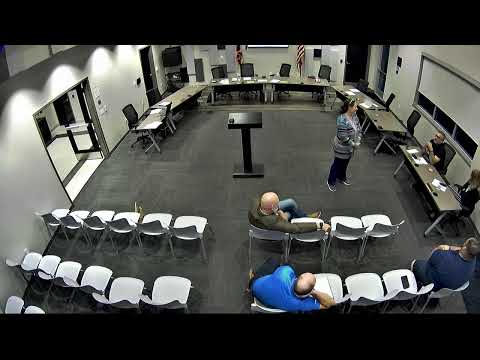
Plain City councilors and residents discussed changes to camping rules and enforcement at Pastime Park on the council meeting agenda, focusing on reservation-only sites and how long campers may stay.
Public commenter Barry Thomas told the council he visits the park daily and asked why “we changed all the rules and regulations at Pastime Park about camping,” and why the village hired staff to enforce them. Thomas said he installed the park’s first electric and water and that recent changes were unfamiliar to longtime users.
Resident Craig Nose asked the council to adopt a resolution to exempt Plain City residents from the 180-day length-of-stay limit at Pastime Park campground, saying the limit is “meant to manage nonresident visitors, not to penalize residents.” He argued local residents “already pay into the park year round through taxes, local spending, and seasonal use” and recommended the council remove the restriction for city residents while keeping it for nonresidents.
Council discussion noted several operational issues: some campsites (identified in the meeting as sites 6–10) are usable without an online reservation; staff said those unreserved sites allow people to sign in on-site and that, under current practice, campers sometimes move between those sites to extend stays. Council members said they wanted to avoid piecemeal changes and proposed grouping potential rule changes and opening the discussion to Parks and Recreation for a joint review during the winter shutdown period. One council member said current thinking was to close the campground in January through March, then implement changes together rather than incrementally.
Council members repeatedly raised three decisions to be resolved: whether all sites should require advance reservations, whether to shorten the consecutive-stay limit (one council member mentioned a recommendation of “no more than 30 consecutive days”), and how any aggregate stay limits would work (for example, how long a camper must stay out of the park before returning). Officials discussed timing for implementing policy changes and whether to aim for a January or February policy rollout; staff indicated December could be used to finalize details so campers can plan for January.
No formal council resolution or vote was recorded during the meeting to change stay limits or to adopt the exemption requested by Craig Nose. Council members directed staff to coordinate with Parks and Recreation and to consolidate proposed changes for consideration in the winter months, with further public discussion before any formal action.
The council also discussed clearer signage and unified reservation procedures so that sites that currently permit walk-up registration would be folded into a single reservation system. Staff and council members agreed further work was needed to determine how enforcement and reservation software would handle exceptions and long-term residents.
Residents and council members asked staff to clarify the timeframe for any new rules and to return with recommendations that specify whether local residents would be treated differently than nonresidents and how any discount or exemption would be documented.
Passage of any ordinance or resolution to change residency exemptions, consecutive stay limits, or reservation requirements was not recorded at the meeting; instead, the topic was set for additional study and joint discussion with Parks and Recreation.