Get Full Government Meeting Transcripts, Videos, & Alerts Forever!
County engineer details watershed protections, impervious limits and pending state rule changes
Summary
County engineer Christopher Sonton explained watershed overlay districts, density and impervious‑surface limits, septic setbacks and recent state bills that could change stormwater regulation for small residential disturbances.
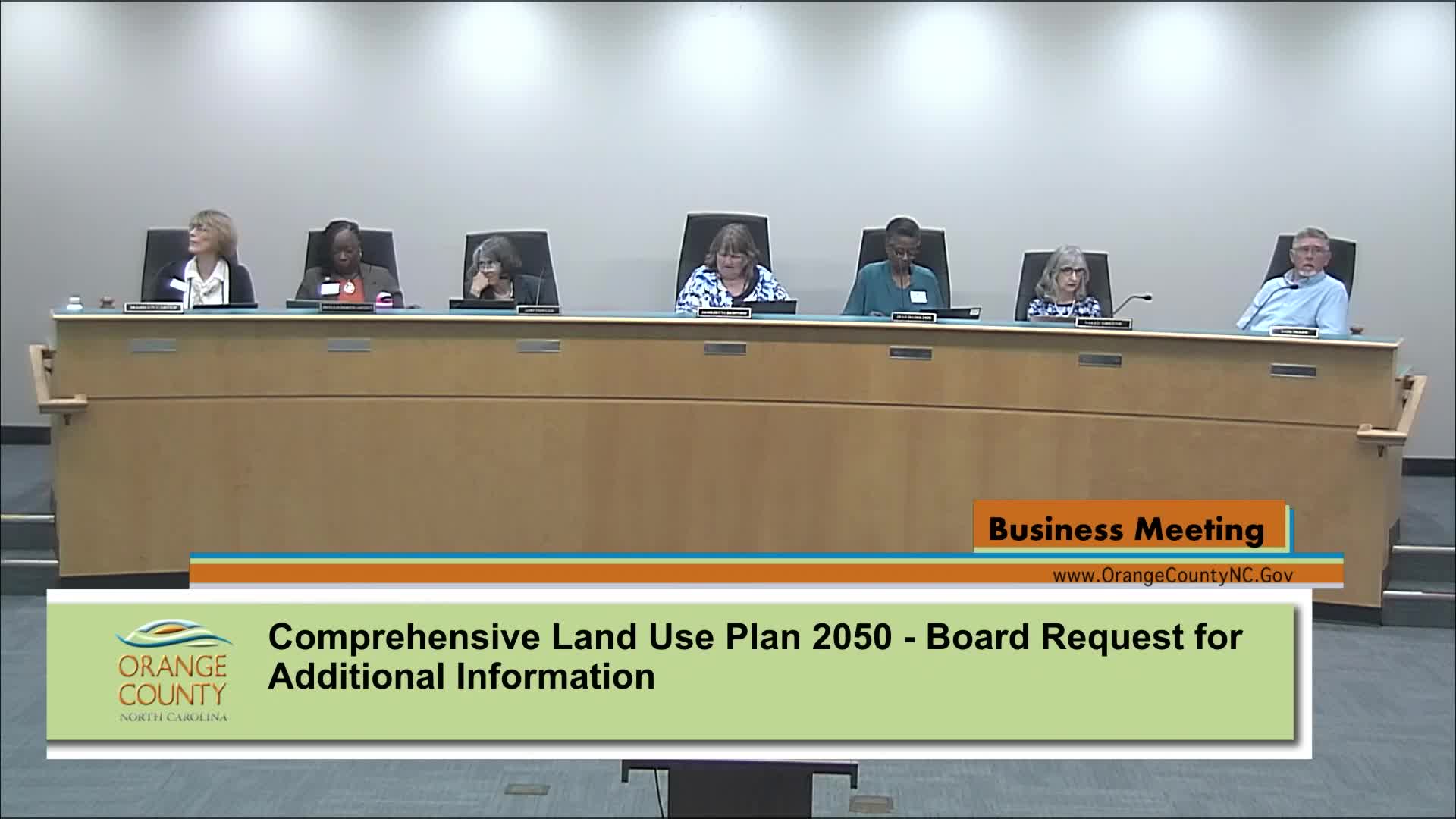
Christopher Sonton, Orange County—s county engineer, walked commissioners through the county—s watershed map and the UDO provisions that govern water‑supply protection overlays, impervious surface limits and density limits on Sept. 9.
Sonton said Orange County contains 18 watersheds, 13 of which are protected as water‑supply watershed overlay areas that carry both maximum impervious‑surface allowances and residential density limits. "We do have 18 individual watersheds in Orange County," Sonton told the board. He described a color‑coded set of protections on the county map: dark blue or dark green areas near reservoirs carry the strictest limits; lighter blue or green areas are less restrictive; and some portions of the county are outside water‑supply protection overlays.
Why it matters: Watershed overlay rules affect what property owners can build in areas that drain to public reservoirs. Limits on density and impervious cover determine feasible lot sizes, septic and water options, and the cost and design of new development.
Key technical limits and requirements cited by staff
- Impervious surface caps: Staff said the county enforces impervious limits that vary by watershed: the most restrictive areas…
Already have an account? Log in
Subscribe to keep reading
Unlock the rest of this article — and every article on Citizen Portal.
- Unlimited articles
- AI-powered breakdowns of topics, speakers, decisions, and budgets
- Instant alerts when your location has a new meeting
- Follow topics and more locations
- 1,000 AI Insights / month, plus AI Chat