Schools say state budget impasse forces local austerity, reserves and hiring freezes
Loading...
Summary
Chapel Hill-Carrboro and Orange County school officials told county commissioners that a still-unpassed North Carolina state budget is forcing districts to run on continuation budgets, hold salary increases in reserve and maintain hiring and non-personnel spending freezes while they monitor fund balances.
Chapel Hill-Carrboro City Schools and Orange County Schools told the Orange County Board of Commissioners they are operating amid ‘dire’ state-level uncertainty and are taking local steps to protect classroom services.
Both districts said the North Carolina General Assembly has not adopted a state budget; districts are running on continuing resolutions and a series of short “mini” bills while officials wait for a final state plan.
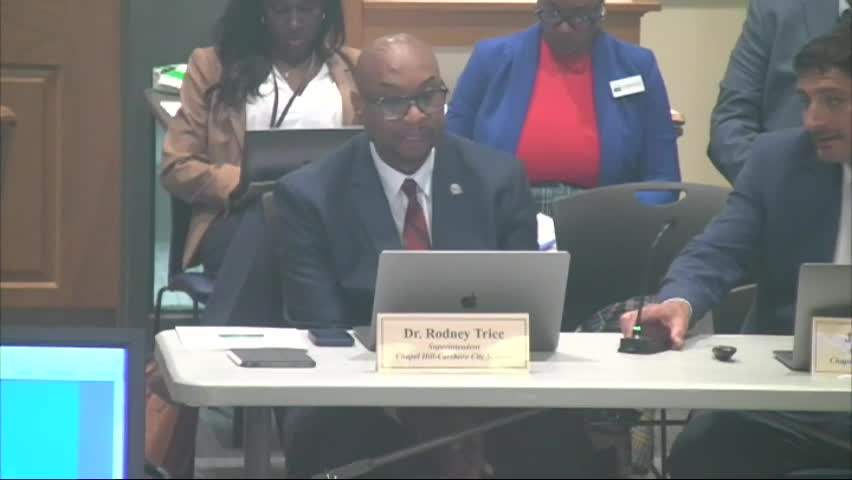
‘‘The state really is at a budget impasse right now,’’ Jonathan Scott, chief financial officer, Chapel Hill-Carrboro City Schools, said. He told the boards the legislature may not take up a budget until November 2025 and that a dispute over proposed personal and corporate tax cuts is a key cause of delay. ‘‘It really is providing a lot of ongoing uncertainty for educational funding.’’
Why it matters: Local school budgets depend heavily on state funding and benefit-rate decisions. Without a state budget, districts must choose short-term steps that can protect classrooms but leave future options constrained.
What districts are doing: Scott said Chapel Hill-Carrboro adopted a three-tier reduction strategy earlier to eliminate a structural deficit; preliminary audit figures show the district may add about $200,000 to its fund balance. The district plans a 3% salary increase but will place that amount into a salary reserve pending state action, freeze 25% of non-personnel budgets to create a $1.75 million contingency and deploy planned ‘‘tier 3’’ reductions that began July 1, 2025, estimated to yield about $4 million annually.
‘‘The board's number one priority though is to rebuild its fund balance,’’ Scott said.
Orange County Schools CFO Rhonda Rath said the district adopted the budget it presented in the spring and is being conservative. ‘‘We did adopt that in August and that is what we have and are planning for at this time, until we hear more from the state,’’ Rath said. She reported a beginning fund balance of about $3.1 million and said the district anticipates putting funds back into fund balance once the audit is final.
District leaders described the steps as contingency planning rather than new policy choices. ‘‘We are being very conservative and very thoughtful, in our spending and we are just continuing to review all of our departmental budgets and scaling back where we can and where it is appropriate with student outcomes being our priority,’’ Rath said.
Discussion and questions: Commissioners asked for clarifying detail about how often staff will report on budget status; school leaders said quarterly updates to boards and frequent finance/facilities committee meetings will keep oversight active. Orange County commissioners asked for written details of the contingency steps so the county can understand the interplay between county capital approvals and school budget requests.
What was not decided: No formal county action or vote took place. The districts reported current steps; final decisions will depend on the state budget outcome and pending audits.
Ending note: Both districts emphasized they were ‘‘preparing for the last year’’ and trying to protect classroom instruction while restoring fund balances if state funding stabilizes.