Get Full Government Meeting Transcripts, Videos, & Alerts Forever!
Get email alerts on the Water Resources topic
No spam. Unsubscribe anytime.
Wake County official unveils 50-year ‘Wake 1’ water plan, seeks municipal endorsements
Summary
Wake County presented a draft 50-year water plan to the Wake Forest Town Council, outlining growth-driven supply, quality and flood-resilience strategies and requesting municipal participation and endorsements; public comment on the draft was open through Oct. 10.
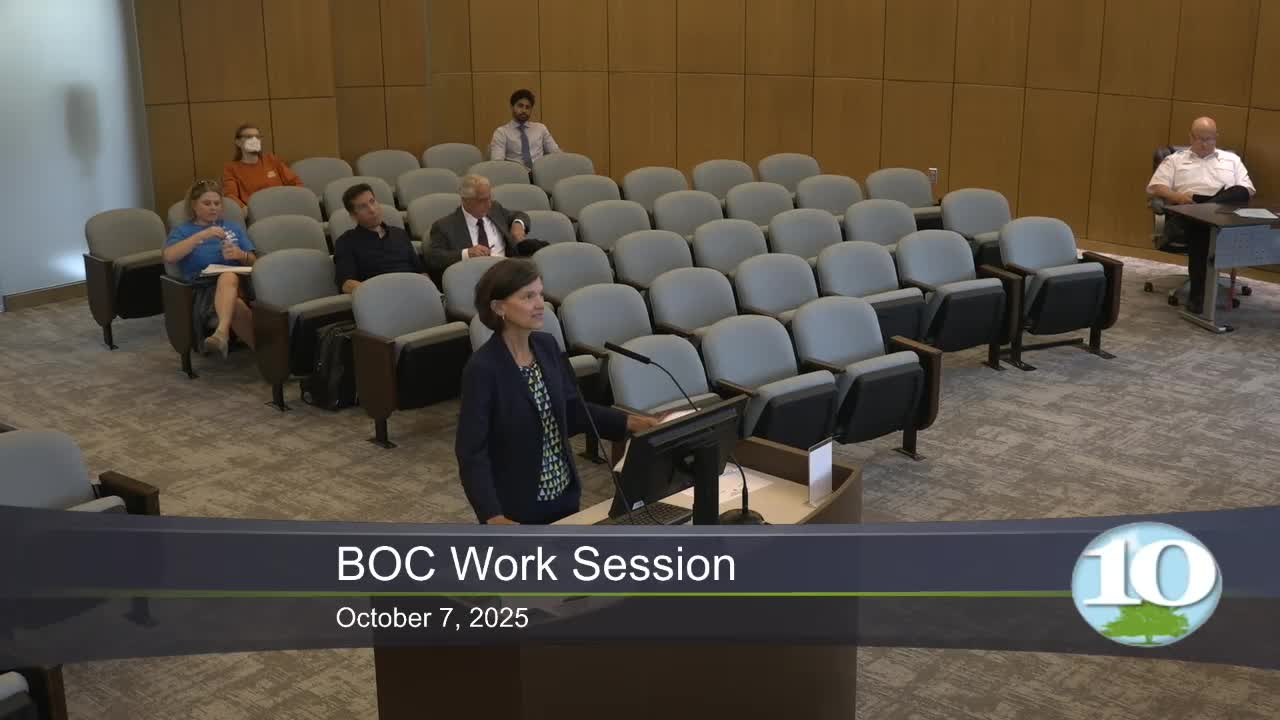
Nancy Daley, Wake County’s water resource program manager, told the Wake Forest Town Council that Wake County has drafted a 50-year “Wake 1” water plan and is seeking continuing municipal participation and endorsements. The draft plan, Daley said, takes a holistic approach — looking at surface water, groundwater, stormwater and wastewater together — and is out for public comment through Oct. 10.
Why it matters: Wake County projects population and demand increases over the next 50 years that will require additional investments in water supply and treatment. Daley said the plan aims to preserve access and affordability for residents, protect agricultural uses and increase resilience to extreme weather events.
Key points from the presentation: Daley described four primary focus areas for the draft plan — optimizing water supplies (including reuse and rainwater capture), water-quality improvements and private-well outreach, land conservation and agricultural preservation, and flood resilience through both green (nature-based) and gray infrastructure. She said the plan was developed with municipalities, a Wake County Board–appointed Water Partnership and technical consultants including Hazen and Sawyer, Tetra Tech and RTI.
Daley emphasized collaboration: “It’s going to take everyone participating,” she told council members, adding that the plan draws on more than 2,800 public survey responses and numerous stakeholder workshops. She noted regional events such as recent storms and past droughts as examples of risks the plan addresses and cited a Wake County Board of Commissioners decision in 2022 to advance development of the plan.
Questions and follow-up: Council members asked whether their governing body would be asked to formally endorse the plan; Daley said municipalities are not required to endorse it but Wake County hopes to get endorsements. The presentation invited Wake Forest staff subject-matter participation on the Wake County Water Partnership and asked the town to promote the draft plan and stakeholder engagement.
Next steps: Daley said comments would be accepted through the end of the public comment period (Oct. 10) and the county expects to return a final plan to the Wake County Board of Commissioners in early 2026.
Ending: Council members thanked Daley for the briefing and for Wake Forest’s involvement on the Water Partnership; no formal municipal action on the plan was taken at the meeting.